
A proper recovery kit is an essential piece of gear for any 4×4 enthusiast, and Tuff Terrain offers a selection of kits to suit different levels of off-road ambition.
Off-road travel exposes vehicles to sand, mud, rocky terrain and steep tracks, and even the most capable rigs can become stuck or encounter obstacles. A recovery kit gives drivers the tools to manage these situations safely and efficiently, without improvising under pressure.
Straps, shackles, ropes, tree straps, winch accessories, and tyre deflation tools are all critical, and having them organised and accessible can make the difference between a smooth recovery and a stressful, risky situation.
Tuff Terrain Bush Kit Lite
The Tuff Terrain Bush Kit Lite is a compact, practical recovery kit for new and casual 4x4ers, providing all the essential tools for safe off-road recoveries without unnecessary complexity.
Designed for bush and beach use, it brings together straps, shackles, a winch ring, and a dampener into a single organised bag, keeping gear protected, easy to access, and ready for immediate use. Every component is load-rated to suit vehicles within their specified working limits, giving confidence in standard recovery scenarios.
Safety and efficiency are at the core of the Bush Kit Lite. Soft shackles, a recovery hitch, gloves, and a winch dampener reduce the risk of injury and equipment damage, while the organised bag eliminates fumbling or misplacing items. Lightweight and compact, the kit stores easily in most vehicles, making it ideal for weekend trips, touring, or spontaneous off-road adventures.
Tuff Terrain Bush Kit Pro
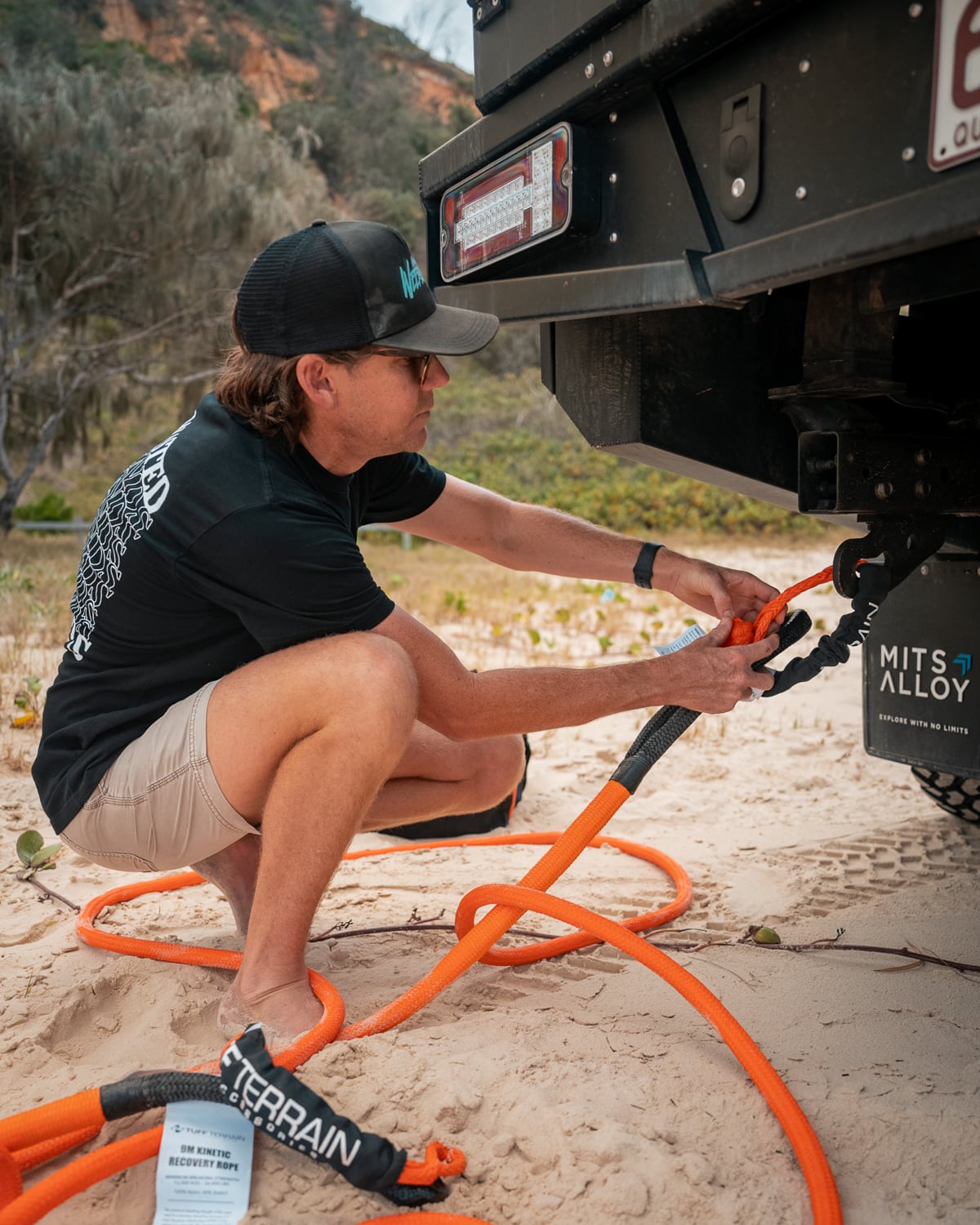
The Tuff Terrain Bush Kit Pro is a professional-grade recovery kit built for serious off-road enthusiasts.
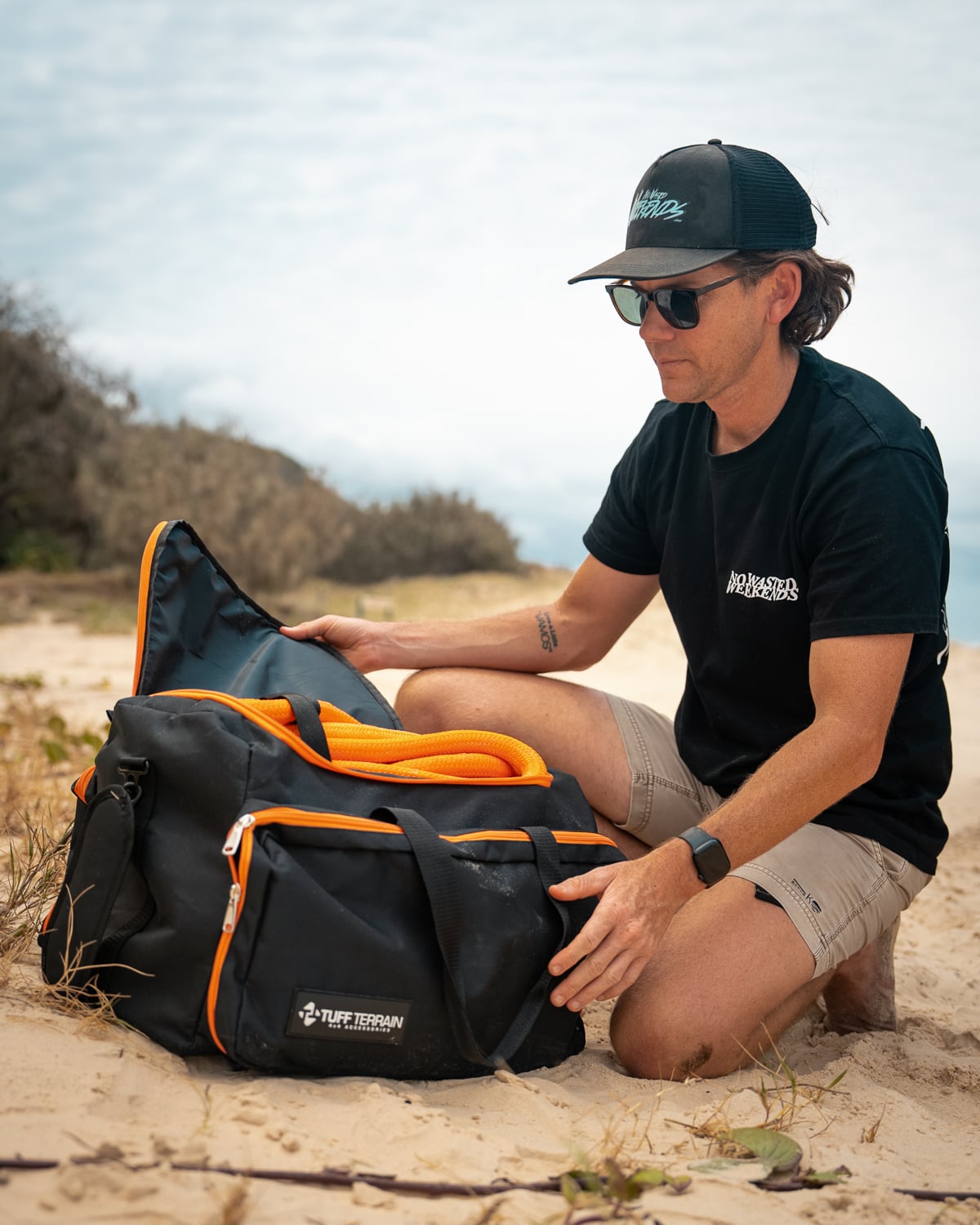
Designed to handle everything from soft recoveries to full winching operations, it combines premium-rated straps, ropes, shackles and winch accessories in a single heavy-duty package. Packed into a rugged recovery bag, all components are organised for quick access, protected in transit, and ready for immediate use.
The kit includes multiple 17T soft shackles in sheathed and braided designs, a 9T kinetic rope, a 3m static rope, extension and tree trunk straps, winch rings, a winch dampener, recovery gloves, and a soft shackle recovery hitch. This combination covers a wide range of recovery scenarios, from simple pulls to complex triple-line winch operations. Each item is engineered for high load capacity, durability, and safe operation, while soft shackles and protective accessories reduce the risk of injury or equipment damage.
The Bush Kit Pro is ideal for use in sand, mud, rocky terrain, or remote bush tracks where preparation and reliability are critical. The organised heavy-duty bag keeps gear secure, easy to transport, and immediately accessible, removing the need to chase scattered equipment or compromise safety under pressure.
Tuff Terrain Deluxe 12K Recovery & Air Down Kit
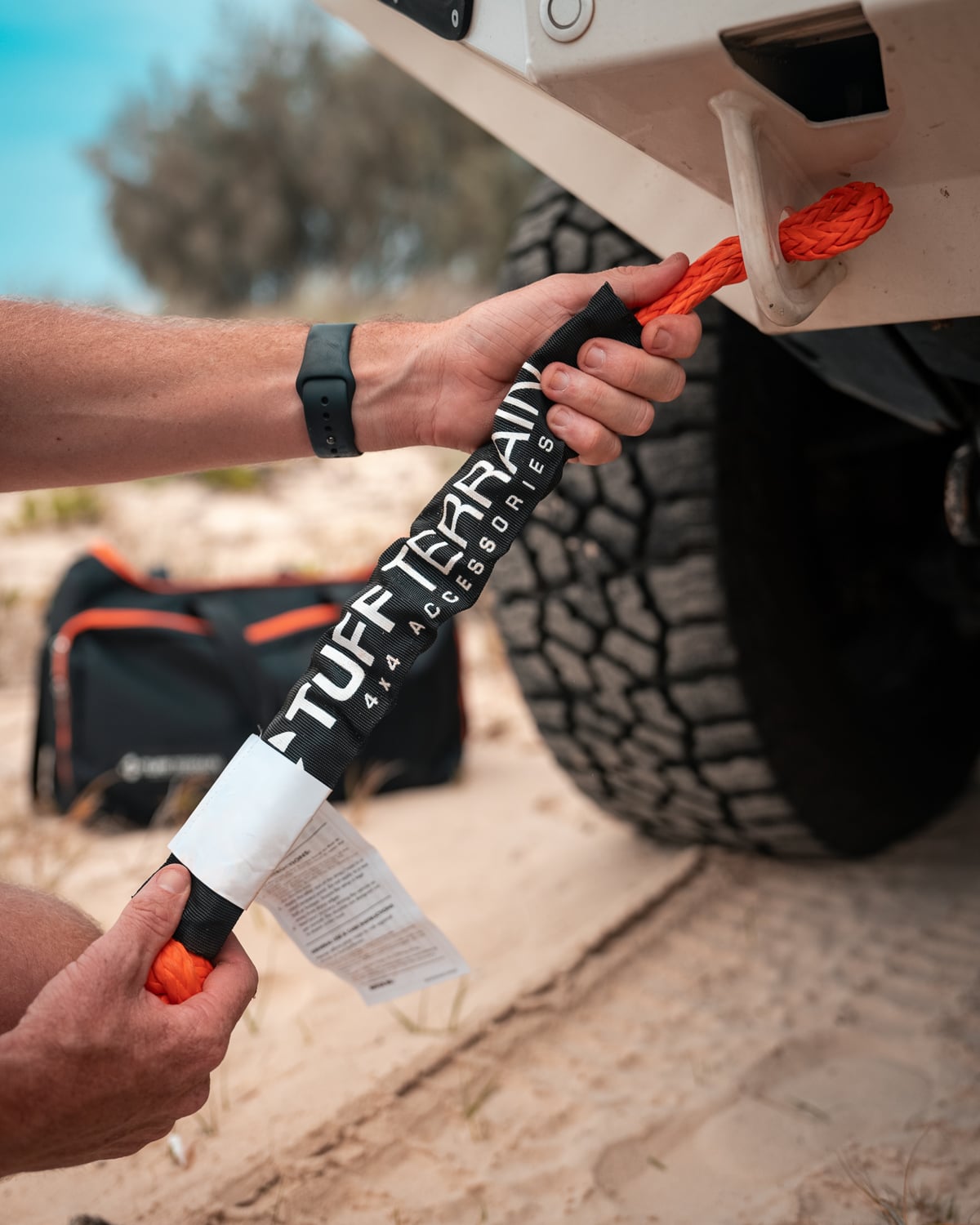
The Tuff Terrain Deluxe 12K Recovery & Air Down Kit is a comprehensive solution for off-road drivers who want to manage two critical tasks in one package: Vehicle recovery and tyre deflation.
It combines ropes, straps, shackles and winch accessories with quick-connect tyre deflators, allowing drivers to prepare for challenging terrain and handle recoveries efficiently. All items pack into a single heavy-duty bag for easy transport and immediate availability.
For recovery, the kit includes a 9m 12,000kg kinetic rope for snatch pulls, providing controlled stretch to store and release energy smoothly, and a 3m 28,900kg static rope that maintains firm tension for bridging or extending anchor points. Five soft shackles rated at 15,000kg, in sheathed and braided designs, allow fast, lightweight connections without the weight or sharp edges of metal shackles.
An alloy winch ring helps redirect ropes and can double pulling power, while a recovery hitch provides a smooth attachment point for soft shackles. Supporting accessories include a 12T tree trunk strap, a 5T extension strap, a winch dampener, and recovery gloves.
The air-down component features four quick-connect tyre deflators with preset pressures, enabling consistent and precise tyre deflation for sand or soft terrain. Combining recovery and tyre preparation gear in one organised kit reduces setup time and ensures drivers are equipped for common off-road challenges.
Modern touring setups rely heavily on 12V power. Fridges, camp lighting, device charging and camera gear all need electricity and nobody wants to flatten their starting battery in the middle of a remote trip.
That’s where solar panels and solar blankets for 4WDs come into play. Combined with a dual-battery system, solar allows your auxiliary battery to keep charging while you’re camped, meaning you can stay off-grid longer without running the engine.
Here’s how 4WD solar systems work, what gear you’ll need and how to set one up for touring 👇
Why solar is ideal for 4WD touring
Solar panels convert sunlight into usable power that feeds directly into your auxiliary battery.
For touring setups, the biggest advantage is simple: your battery keeps charging while you’re parked. That means you can run gear like:
- 12V fridges
- LED camp lighting
- phones and camera batteries
- GPS and communication gear
Without needing to idle the vehicle or drive every day just to keep your batteries alive. For longer remote trips, solar becomes one of the most useful upgrades you can add to a touring setup.
The basic gear you need for a 4WD solar setup
Most touring vehicles use a fairly simple system made up of four key components.
- Solar panel or solar blanket: Panels or solar blankets collect energy from the sun.
- Auxiliary battery: Usually part of a dual-battery system that powers accessories without draining the starter battery.
- Solar regulator: Controls the flow of energy into the battery to prevent overcharging. MPPT regulators are the most efficient option.
- Cables and connectors: Many touring setups use Anderson plugs, which make connecting solar panels quick and reliable.
Many systems also include a battery monitor, which helps track power usage and remaining battery capacity.
Solar blankets vs Solar panels
When choosing solar for a 4WD, most travellers choose between solar panels or solar blankets.
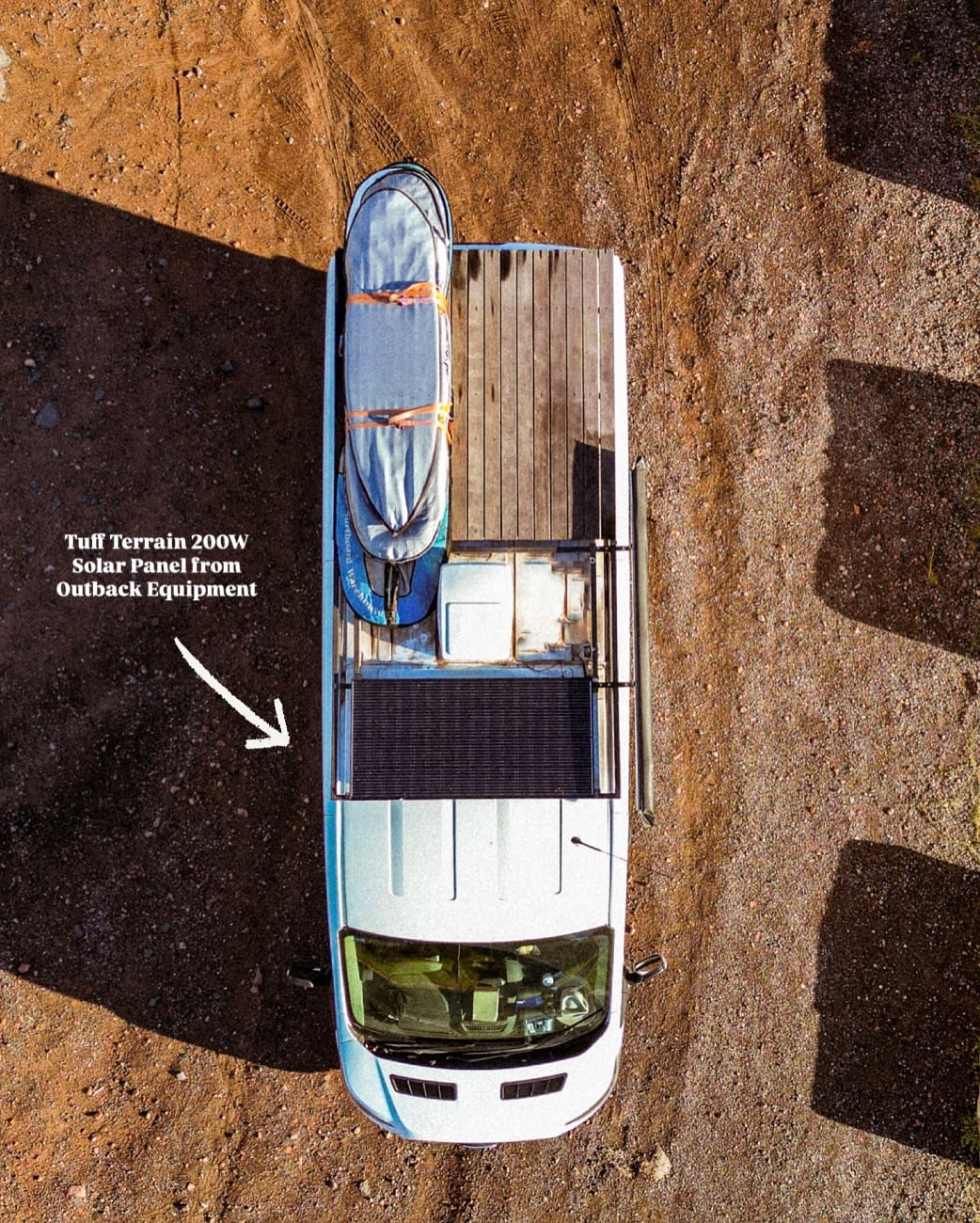
Panels are popular because they’re durable and efficient. Solar blankets use flexible solar cells that fit into a compact bag, and they’re particularly popular with touring setups where storage space is limited. Outback Equipment has a large range of solar blankets and panels, including Tuff Terrain Hardkorr, Voltech, Sphere and Companion. Browse range HERE.
Solar panel pros
- Strong aluminium frame
- High efficiency
- Easy to angle toward the sun
Solar panel cons
- Bulkier to store
- Slightly heavier
Solar blanket pros
- Lightweight and compact
- Easy to pack in drawers or behind seats
- Large surface area
Solar blanket cons
- Less durable than rigid panels
- Must be laid flat on the ground
How much solar do you need for a 4WD setup?
Your solar setup should be matched to how much power your gear uses each day. Typical touring gear consumption looks something like this:
| Appliance | Approx. usage |
|---|---|
| 12V fridge | 1-3 amps/hour |
| LED camp lights | 0.5 amps |
| Phone charging | 1 amp |
| Laptop or camera charging | 3-5 amps |
A typical touring setup will use 40-70Ah per day. A 200W solar panel or solar blanket can usually produce around 50-70Ah per day in good sunlight, which is enough to keep most setups running. Travellers running larger fridges, inverters or extra accessories may choose 300W or more of solar capacity.
How to set up solar at camp
Solar systems are quick to deploy once you arrive at camp. A typical setup looks like this:
- Park the vehicle in shade if possible.
- Place the solar panel or solar blanket in direct sunlight.
- Connect the panel to your battery system using the Anderson plug.
- Adjust the angle of the panel during the day if needed.
Because the solar panel sits away from the vehicle, you can keep your 4WD parked in shade while the panel stays in full sun.
Why a good solar regulator matters
The solar regulator is responsible for managing the power coming from your panels.
Most modern touring setups use MPPT regulators, which are significantly more efficient than older PWM designs. They allow solar panels to produce better charging performance — particularly during cloudy conditions or early morning and late afternoon sunlight. Many solar kits come with a regulator pre-installed, making them easier to connect straight to your battery system.
A simple upgrade that extends your time off-grid
For touring vehicles running fridges, lighting and electronics, solar quickly becomes one of the most useful upgrades you can add.
Solar panels and solar blankets allow your 4WD to generate power anywhere you camp, helping keep batteries topped up without relying on the vehicle’s alternator. With the right setup, your solar system quietly charges your battery throughout the day — letting you stay off-grid longer while keeping all the essentials powered.
Anyone who has driven onto soft sand with road tyre pressures will know the feeling – the vehicle bogs down almost immediately.
That’s where airing down your tyres comes in. Lowering tyre pressure is one of the most effective techniques in off-road driving, improving traction on sand, mud and rocky terrain while also smoothing out rough tracks. Using a 4WD tyre deflator makes the process quick and consistent, allowing you to reduce tyre pressure accurately before hitting challenging terrain.
Why lowering tyre pressure improves off-road traction
Reducing tyre pressure increases the tyre’s footprint by allowing it to flex and spread out. This larger contact patch helps the tyre grip loose terrain instead of digging into it.
On sand, lower pressures help the vehicle float across the surface rather than sinking. On rocky tracks, softer tyres mould around obstacles, improving grip and reducing harsh impacts through the suspension. Even on corrugated gravel roads, slightly reduced pressures can make a noticeable difference by helping tyres absorb bumps rather than skipping across the surface.
However, pressures shouldn’t be dropped too far. Excessively low PSI can increase the risk of sidewall damage or even cause a tyre to unseat from the rim. Heavier vehicles carrying camping gear, rooftop tents or drawers typically require slightly higher pressures than lighter setups.
When should you deflate your tyres?
Most experienced four-wheel drivers lower tyre pressures whenever terrain becomes loose or uneven. Typical situations where tyre deflation helps include:
- Soft sand driving: Lower pressure allows tyres to float over sand instead of digging in.
- Mud tracks: A larger footprint improves traction and reduces wheelspin.
- Rock crawling: Softer tyres flex around rocks for better grip.
- Corrugated outback roads: Slightly lower pressures can improve ride comfort and vehicle control.
Before returning to sealed roads, tyres should always be reinflated to highway pressures.
Types of 4WD tyre deflators
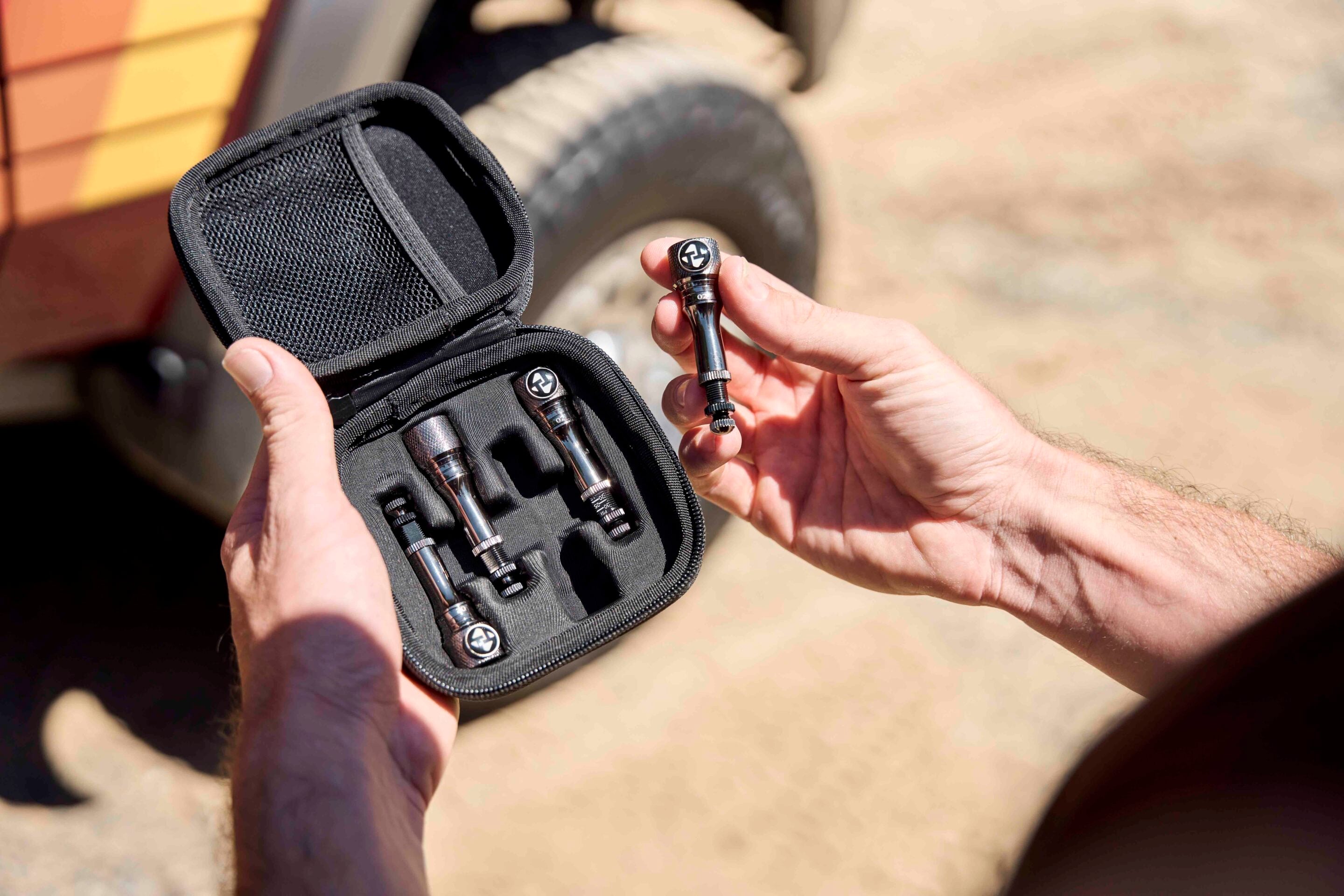
There are several different styles of tyre deflators available – Outback Equipment has a full range of products including brands like ARB, Campboss, Tuff Terrain, iCheck and RAXAR – each designed to make airing down faster and easier on the tracks.
Manual tyre deflators: Manual deflators are one of the simplest options. They typically remove the valve core from the tyre, allowing air to escape quickly while a pressure gauge lets you monitor PSI as it drops. They’re reliable and affordable, but they require you to stay beside the tyre while it deflates.
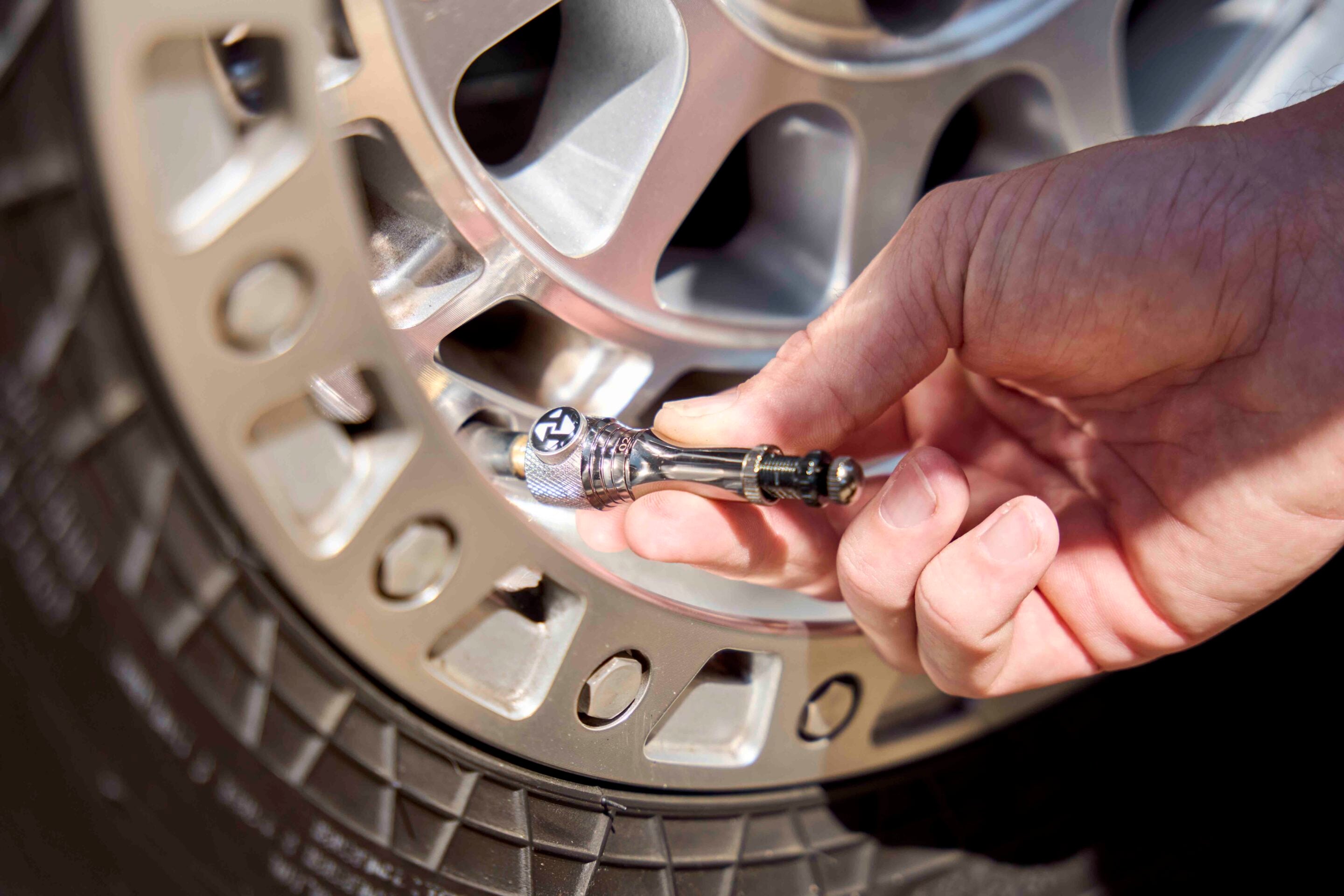
Preset automatic tyre deflators: Preset deflators allow you to set a target PSI before attaching them to the tyre valve. Once connected, they automatically release air until the tyre reaches the selected pressure. Products like Tuff Terrain Quick Connect Tyre Deflators fall into this category. These units allow drivers to dial in their preferred pressure, attach them to the valve stems and let the tyres deflate automatically. Because all four tyres can be deflated at the same time, they can save several minutes when preparing for sand driving or technical tracks.
Multi-tyre deflation systems: Multi-hose systems connect to all four tyres simultaneously using hoses, equalising pressure across the vehicle. These systems are particularly popular with touring setups, as they ensure all tyres reach the same pressure evenly while speeding up both inflation and deflation. Tuff Terrain has units available with both two and four valves.
Common tyre deflation mistakes
Lowering tyre pressures improves traction, but there are a few common mistakes that can cause problems.
- Dropping PSI too low: Very low pressures increase the risk of tyre damage or de-beading, particularly on rocky terrain.
- Forgetting to reinflate before highway driving: Driving at highway speeds on low-pressure tyres causes excessive heat buildup, poor handling and increased tyre wear.
- Using slow or inaccurate tools: Manually checking each tyre can slow down the process. Reliable deflators help ensure each tyre reaches the correct pressure quickly.
Why a good air compressor matters
Once the off-road section ends, tyres need to be reinflated before driving on sealed roads.
Portable 4WD air compressors make this easy, allowing drivers to restore highway pressures quickly before continuing their journey. High-output compressors such as the Tuff Terrain V4 Air Compressor are designed to inflate larger off-road tyres efficiently, which is especially useful for vehicles running 33–35-inch rubber.
Features like long air hoses and quick-connect fittings also make it easier to reach every tyre without constantly repositioning the compressor.
A simple off-road trick every 4WD owner should know
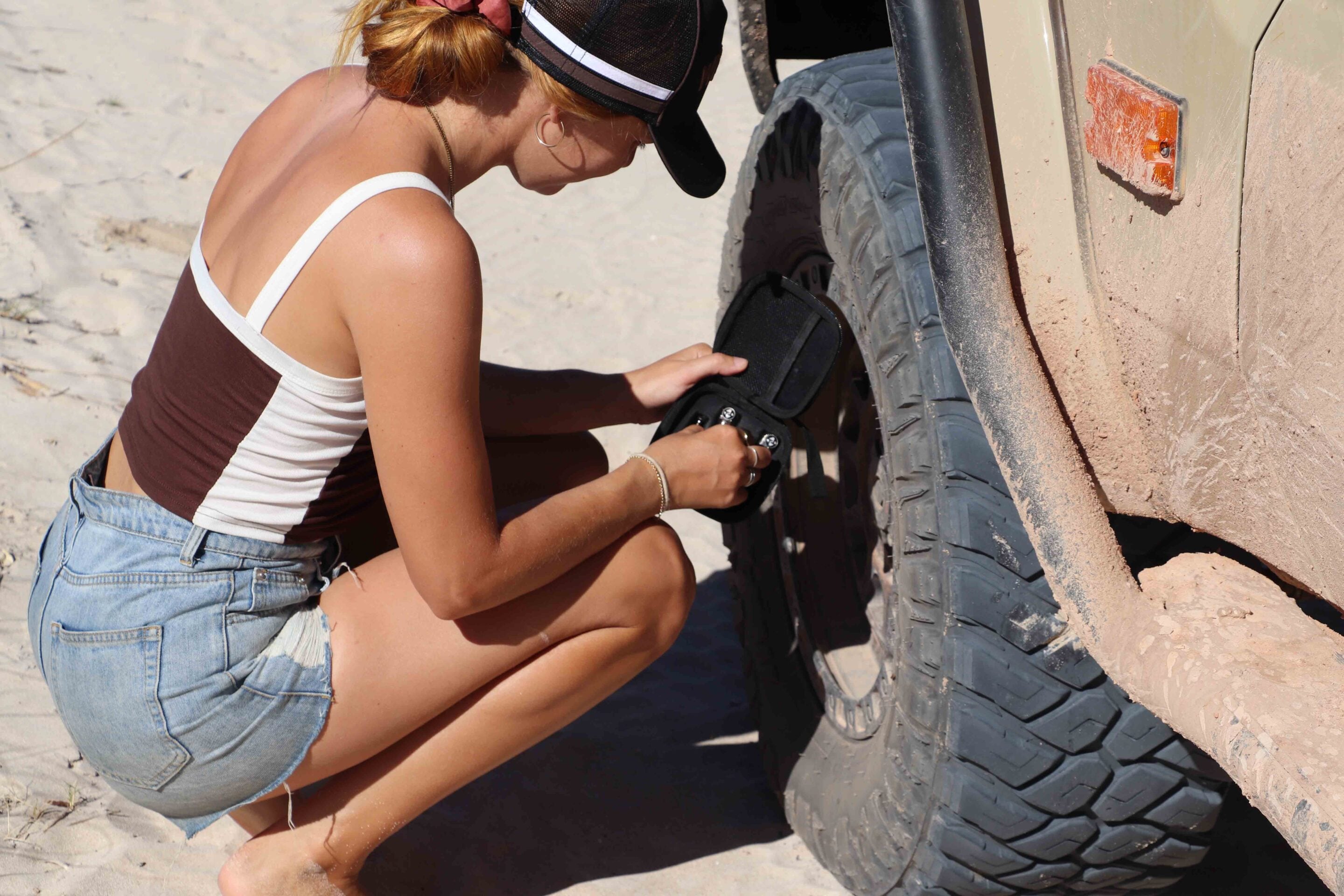
Airing down your tyres is one of the simplest and most effective ways to improve off-road capability. Better traction, a smoother ride and reduced strain on the drivetrain all make it worthwhile.
With the right tyre deflators and air compressor in your recovery kit, adjusting pressures only takes a few minutes – and can make the difference between cruising through difficult terrain or reaching for the recovery gear.
JUMP AHEAD
Part 1: Settling back into the Musso
We’ll never knock back an opportunity to drive the Musso. It may be a bit dated, but it’s immediately familiar, comfortable, and easy to settle into – like an old pair of jeans.
There are no gimmicks, no surprises in the way it handles, and no need for a crash course to figure out how it operates. Buttons and dials are where you’d expect them to be (strangely becoming a rare occurrence these days), and the system’s UI is simple. The Musso consistently flies under the radar in the dual-cab segment, and it probably shouldn’t … there’s a reason it won our Best 4×4 Ute of the Year (Under $60K) award last year.
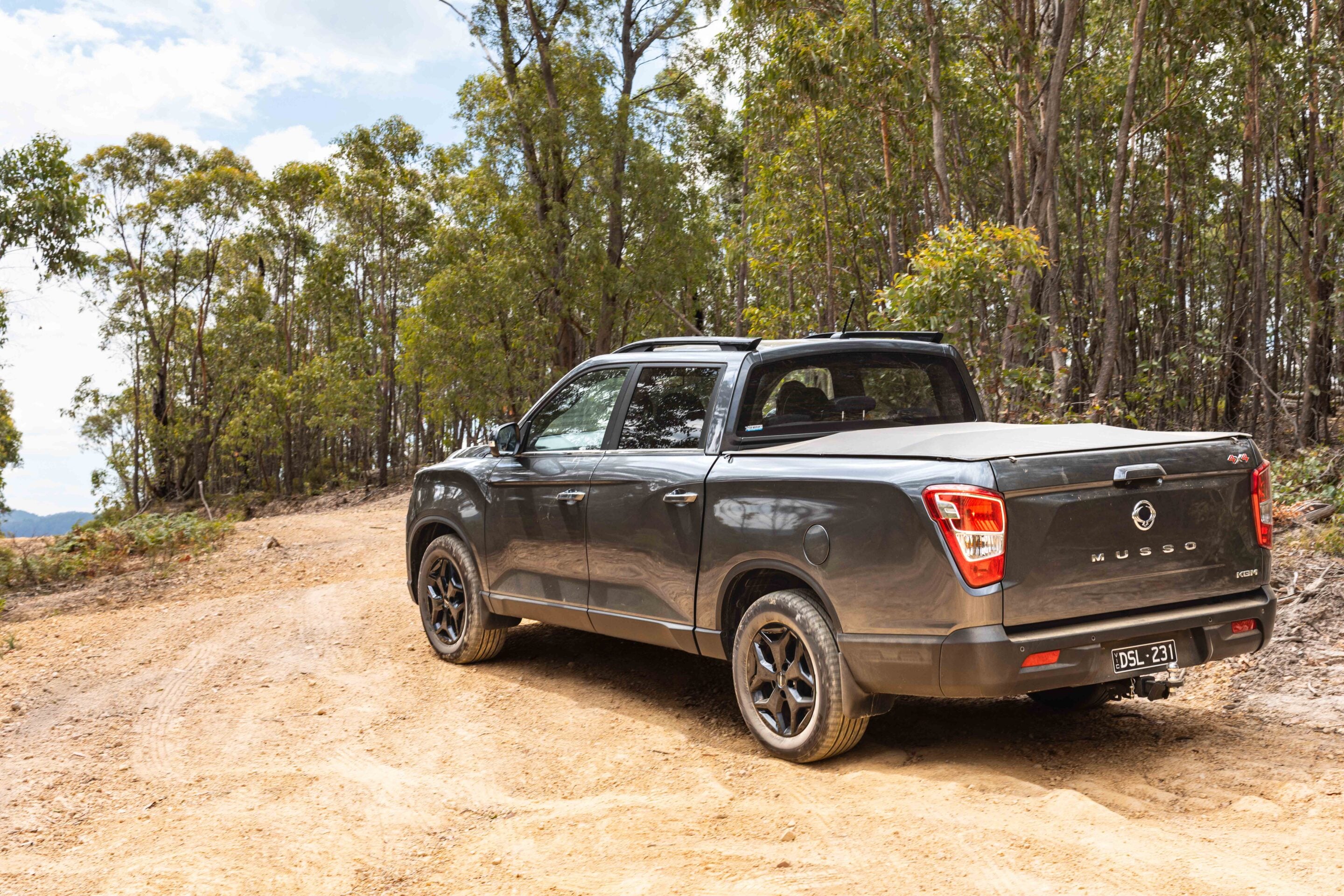
Now sold under the KGM name following the SsangYong rebrand in 2025, the vehicle remains mechanically familiar. Power comes from a 2.2-litre turbo-diesel four-cylinder, producing 133kW at 4000 rpm and 420Nm from 1600–2600 rpm. That’s 20Nm more than the standard Musso, giving this XL V a little extra shove.
Delivered through a six-speed Aisin automatic and a part-time four-wheel-drive system with low and high range, the setup is smooth and predictable on both bitumen and rough tracks. An auto-locking rear differential and tyre pressure monitoring system come standard, adding confidence off-road.
The XL V also adds a longer tub, stretching to 1600mm – an extra 300 mm over the standard model. That provides an additional 251 litres of rear tub capacity, while the wheelbase is 110 mm longer. Convenient tie-down points combined with the extra space make it a cavernous, simply designed tray, ideal for loading camping gear and tools. Our long-termer is equipped with a soft tonneau cover (a $790 optional extra), so you wouldn’t want to leave anything valuable in the tray when unsupervised.
On paper, the Musso is impressively practical. It has a GVM of 2980kg, towing capacity of up to 3500kg, front and rear axle limits of 1400kg and 1850kg, and a payload of 880kg. This test example rides on Nexen N’Priz RH7 255/60R18 tyres, which strike a balance between on- and off-road comfort.
Our first few months with the Musso saw it tackling trails and highways within Victoria. On rugged tracks, it feels steady and dependable. Its part-time 4×4 system, combined with solid ground clearance and healthy torque, makes rutted trails and moderate climbs straightforward. The chassis and suspension are robust, though it reaches its limits earlier than some competitors – the HiLux, for example – when tracks get more serious. On-road, it remains composed, with the longer wheelbase providing stability on highways.
Inside, the cabin is straightforward and intuitive. The heated and ventilated front seats provide comfort on long drives, while the driving position is excellent and supportive, helping reduce fatigue on extended trips. The dual 12.3-inch screens – one for the instrument cluster and one for infotainment – are crisp and responsive.
Some compromises remain: there’s still no wireless Android Auto or Apple CarPlay, and the sound system maxes out too early. We’ll take a deeper dive into these nit-picks in later instalments. Even so, the interior leans toward practicality and usability, with robust controls, good visibility, and a layout that keeps things simple.
At $53,000, the Musso Ultimate XL V delivers a generous list of standard equipment:
- Leather-look upholstery
- Heated and ventilated front seats
- Heated rear outboard seats
- Powered 8-way adjustable driver’s seat with lumbar support
- 360-degree surround-view camera
- Powered sunroof
- LED headlights with sequential indicators
- Subtle exterior styling upgrades, including black grille and bumpers, and 18-inch black alloys
- Advanced driver-assist technology: Autonomous emergency braking; Lane-keeping assistance
We’ve said it before and we’ll say it again: the Musso represents excellent value for long-term ownership.
Part 2: Beach, ‘burbs and family fun
We’ve had a busy few weeks with our Musso, taking it on a coastal road trip, running the kids around day-to-day, and squeezing in a bit of off-road fun.
Through it all, including the long stretches on bitumen to the Peninsula, the Musso remains remarkably composed on the road. The stable suspension and well-cushioned seats in the Ultimate trim make long drives feel effortless, and, despite its size, the Musso never feels intimidating on busy streets. That said, we recently lined it up against an MGU9 for an upcoming comparison, and the MG seemed to dwarf it side-by-side – a reminder that the Musso’s tyres and stance play a big part in how it feels on the road.
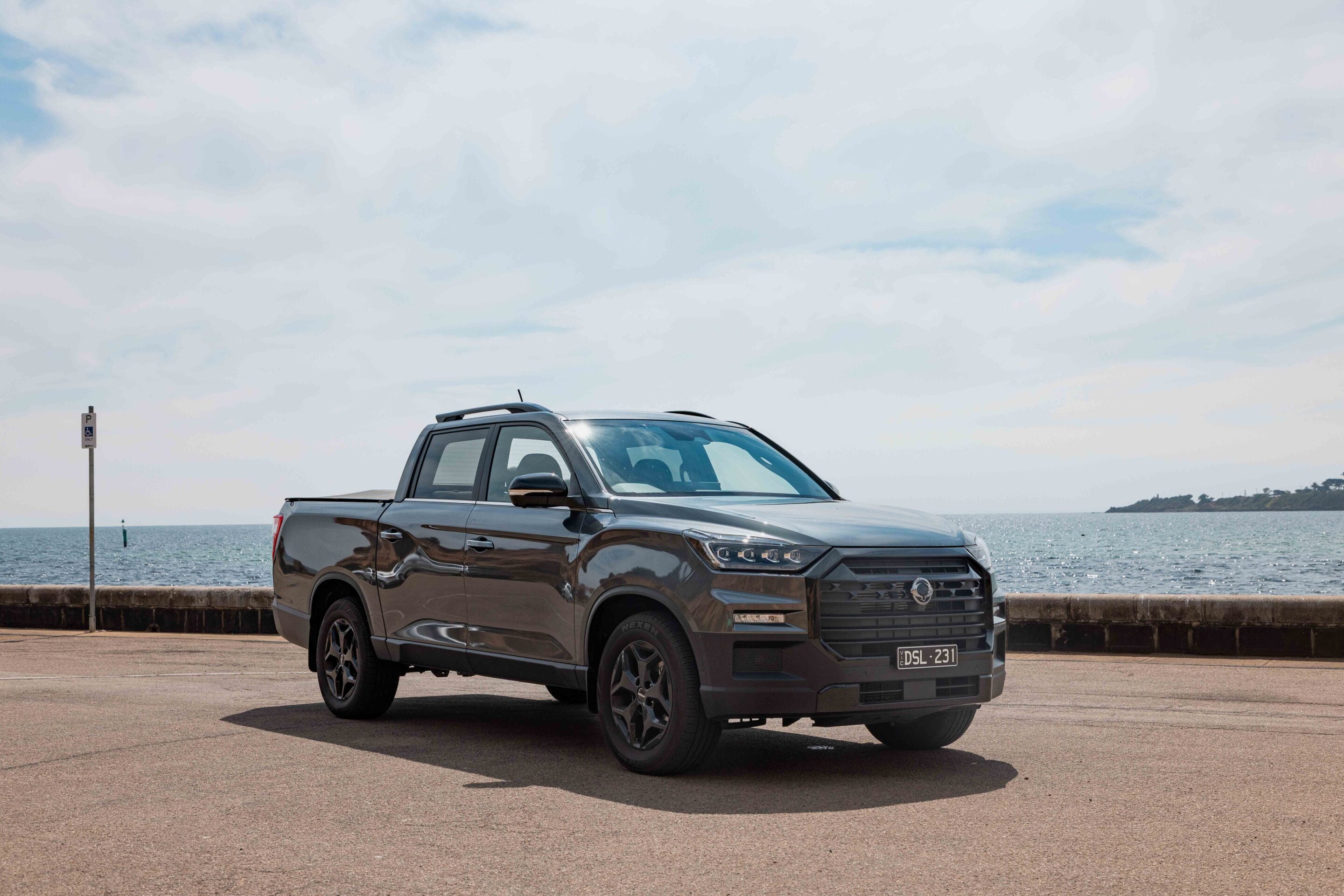
Those stock tyres did struggle on some of the tougher sections when we took it off-road, so anyone planning to push it further off-road would benefit from a set of better all-terrain rubber. Still, the Musso handles moderate trails with confidence, and its simple 4×4 system proves capable and easy to use.
Family life is equally easy. Installing a child seat is straightforward, with two ISOFIX points on the rear outboard seats that are quickly accessed by folding the seats forward. In XLV trim, there’s plenty of space back there too. Another benefit of the XLV is an extra 300mm of tub length, stretching to a cavernous 1600mm. The long tray has been handy for hauling tools and materials, though the four factory tie-down points sit quite low, so you sometimes need contortions worthy of Inspector Gadget to secure a load properly.
There are a few more minor frustrations. The infotainment touchscreen is basic and offers almost nothing if CarPlay or Android Auto aren’t connected, and it is laggy when switching from exterior cameras (when reversing, for example) back to the main display.
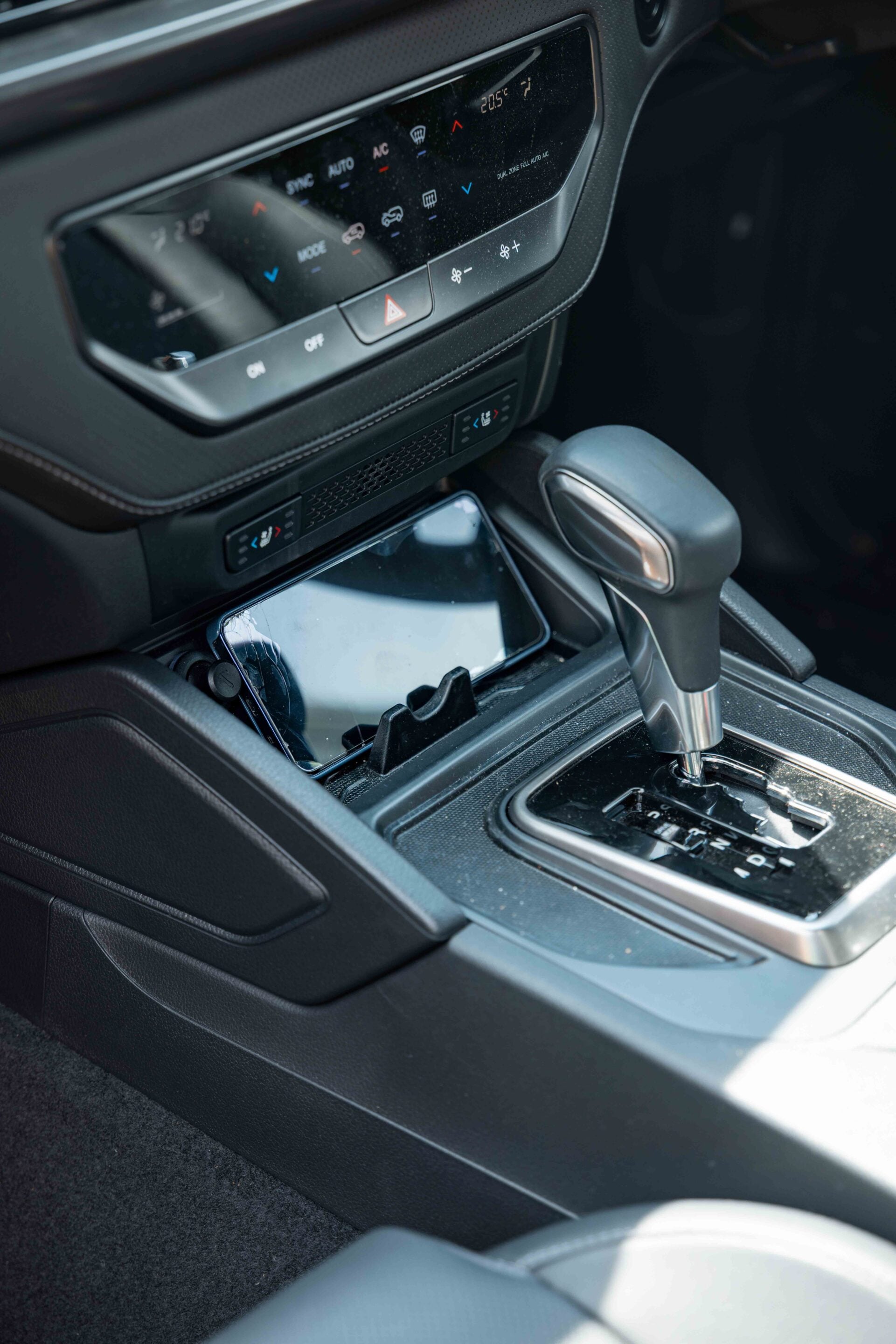
Android Auto users know this common annoyance all too well: Wireless Android Auto is missing despite wireless Apple CarPlay being standard, so a cable is required. A flow-on problem from this is that the phone holder tray is tiny, so the phone will often slide off when cornering. Most of the time, the phone ends up in the centre console or cup holder while plugged in. The Musso definitely feels a bit old-school here.
Still, despite these handful of quirks – which are easy enough to work around – the Musso remains a no-frills vehicle that’s practical, comfortable, and easy to live with, both for the work week and weekend adventures.
Easter presents a fantastic opportunity for adventure, especially for those with a passion for camping and exploring the rugged beauty of Australia through four-wheel driving.
Imagine navigating the thrilling, rough tracks of the outback, feeling the fresh breeze as you cruise along the pristine beaches of K’gari, or embarking on a daring expedition into the majestic Victorian High Country. The stunning landscapes serve as a breath-taking backdrop to your escapade, but to truly make the most of your journey, having the right gear is absolutely crucial.
With thoughtful preparation and the right tools at your disposal, your Easter escape can transform into a memorable adventure filled with excitement and discovery. Whether you’re a seasoned camper or a first-time adventurer, we’re here to guide you with a curated list of must-have items that will ensure your holiday is nothing short of amazing. Gear up for an unforgettable experience this Easter.
JUMP AHEAD
- Lighting and entertainment
- Cooking
- Comfort and convenience
- Navigation and communication
- For the kids
- Recovery and safety
- Accommodation and shelter
Lighting and entertainment
When the sun goes down being able to see your campsite is a priority, and portable lighting is essential
A decent head torch that is rechargeable and has red LED night vision helps when eating in the dark, so you won’t blind anyone when talking to them. Plus, a couple of flood beam lights will illuminate the campsite. If you don’t like bugs, lights with a red light colour option don’t attract them as much as white or yellow lights, and they keep your night vision working.
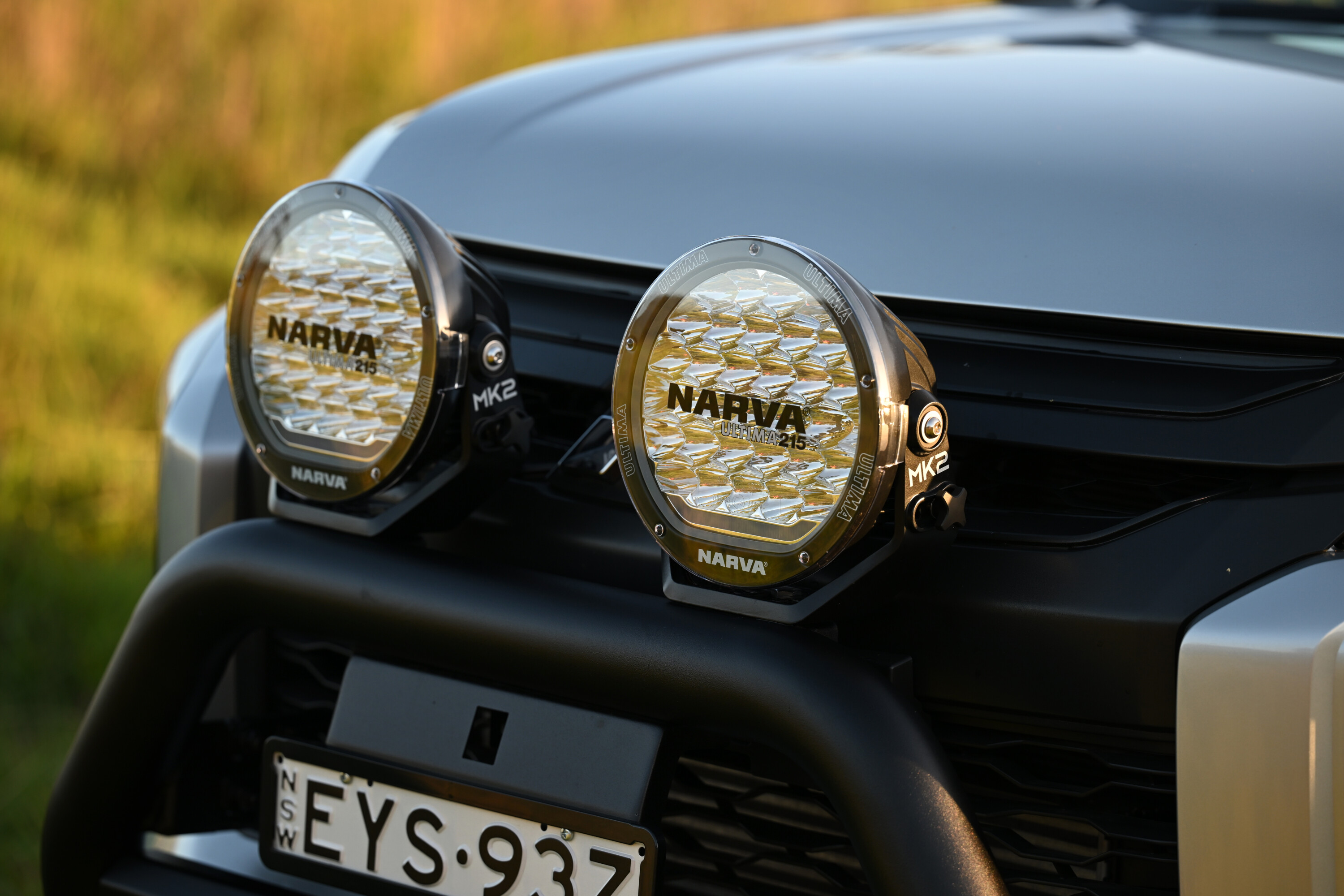
A drone is a fantastic tool for capturing the epic moments of your adventure, and a dedicated digital camera will produce much better images than a mobile phone.
A portable Bluetooth speaker will keep the tunes blasting, and it’s a good idea to download a few playlists onto your music device. Without mobile coverage, streaming music isn’t feasible. If you want to avoid technology, why not bring along a puzzle book and some games to enjoy, like UNO or Yahtzee?
Whether you’re off to a sun-soaked beach or setting up camp by a sparkling river, make sure to pack your trusty fishing rod and tackle box because what’s better than a day filled with laughter, sunshine and the thrill of reeling in the big one? And remember, depending on the state you’re fishing in, you might also need a fishing licence.
Cooking
A small, lightweight barbecue lets you easily cook up a feast, whether it’s a morning fry-up or a slow-cooked roast dinner. Consider flat-pack options, as they are easy to assemble and take up little space in your vehicle.
A dual-zone fridge/freezer keeps your food fresh, drinks cold and ice cream solid without the hassle of ice. At the same time, a decent icebox is excellent for keeping the drinks icy cold for up to three days and providing ice blocks for your whisky and dry. I say decent because some cheap ice boxes are like an Esky; the ice melts quickly.
Sitting around or cooking on a campfire is synonymous with bush camping in Australia, but more destinations require you to use a constructed fireplace or something portable.
If fires can’t be lit or you prefer to cook with gas, there are plenty of propane/butane/LPG stoves to choose from, and prices range from $20 to more than $500. Speaking of pots and pans, lightweight and stackable is the way to go.
Comfort and convenience
When it comes to camping comfort, a cosy chair is non-negotiable! After countless adventures, we’ve discovered that everyone has their unique favourite when it comes to camp chairs.
Picture this: a flexible table that serves multiple purposes, from meal prep and dining to hosting a fun card game night. We recommend one made from durable aluminium, which can handle hot pots without a hitch.
If you’re working with a 12V setup, a DC-DC charger paired with a lithium battery is your go-to for reliable power. But for a hassle-free option, consider a portable power station; they make life so much simpler these days. Plus, don’t forget about solar panels or blankets to keep your batteries charged and your adventures powered up.
Now, let’s talk about privacy. An ensuite tent is a game-changer for those essential moments – whether it’s for the porta-potty, changing clothes or enjoying a shower in the great outdoors. And for those who crave instant hot water, a quality portable hot tap heats things up quickly when hooked up to LPG. If you’re looking for alternatives, a compact water heater will get the job done just as effectively.
Navigation and communication
Getting to your destination without getting lost is the name of the game, and a off-road GPS helps you navigate remote areas without relying on a phone signal.
Please don’t rely on Apple or Google Maps, as they could lead you up the garden path. Having paper maps that cover the areas you are heading to is a great backup. Other helpful apps for adventures include Wikicamps, CamperMate and Newtracs.
A UHF is handy for vehicle-to-vehicle communication. A 5W handheld unit is great for keeping an eye on the kids or guiding someone when they’re parking a camper trailer. A small satellite communicator lets you send SOS messages to emergency contacts if needed.
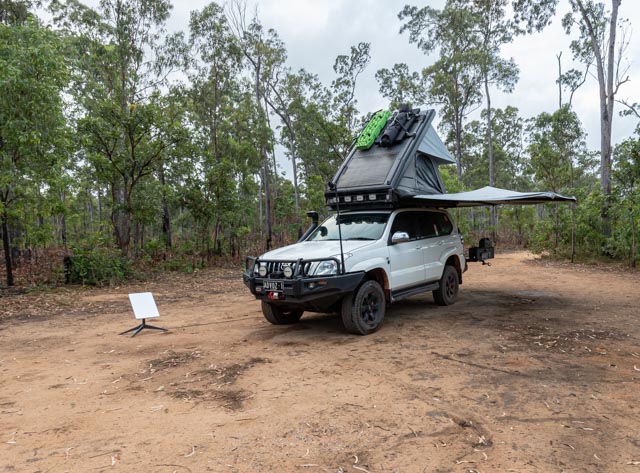
A true game changer for adventurers is Starlink, an innovative and portable high-speed satellite internet system developed and operated by SpaceX. This cutting-edge technology opens up new possibilities for connectivity in remote locations where traditional internet options may be limited or non-existent.
With Starlink, travellers and outdoor enthusiasts can easily stream their favourite shows on Netflix, stay in touch with friends and family through video calls, share their adventures on social media, or perform any other online activities they typically enjoy at home.
This advancement transforms the way people engage with the world while pursuing their adventurous lifestyles, making it easier than ever to stay connected and entertained wherever you go.
For the kids
Easter is just around the corner and is a magical time of year that transforms campsites into a cheerful hub as kids enjoy whimsical Easter egg hunts.
Imagine the delight on children’s faces as they scurry around the bush searching for those delightful, colourful Easter eggs, each one waiting to bring a radiant smile and a sense of triumph when discovered.
You can’t overlook mouth-watering hot cross buns. These iconic treats, oozing with rich, aromatic spices and finished with a shiny, sweet glaze, are delicious and evoke warmth and comfort, making them perfect for a cosy breakfast. Picture them freshly toasted on the grill on the fire, their intoxicating aroma wafting through the air as you savour each delightful bite.
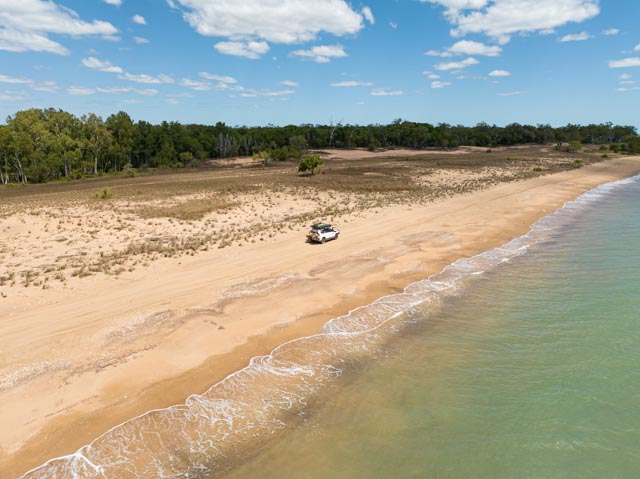
The magical Easter Bunny, that whimsical figure of wonder, deserves a moment to breathe after a busy day of hiding eggs. Once the last egg has been tucked away, it’s only fitting that this enchanting creature unwinds with wonderfully refreshing drinks. As you gather around the crackling fire with your family, make sure you’re prepared for an extraordinary celebration.
Are you worried about the potential hazards of glass bottles breaking during your adventures? Off Track Wines has thoughtfully curated a stunning selection of premium wines conveniently packaged in practical, portable cans – ideally suited for your Easter break.
Recovery and safety
Looking to make the most of your Easter getaway? Some of the most stunning destinations require a bit of preparation, like adjusting your tyre pressures to suit varying conditions.
A dual-function tyre inflator is a handy solution for inflating and deflating multiple tyres at once, making adventures smoother and more efficient. You’ll also need a reliable air compressor to restore tyre pressure—whether a portable kit or one mounted in your vehicle, it comes in useful on any trip. A set of tyre plugs can help you fix a punctured tyre without having to remove the wheel. When heading off-road or tackling challenging terrain, you might also come across obstacles that require vehicle recovery.
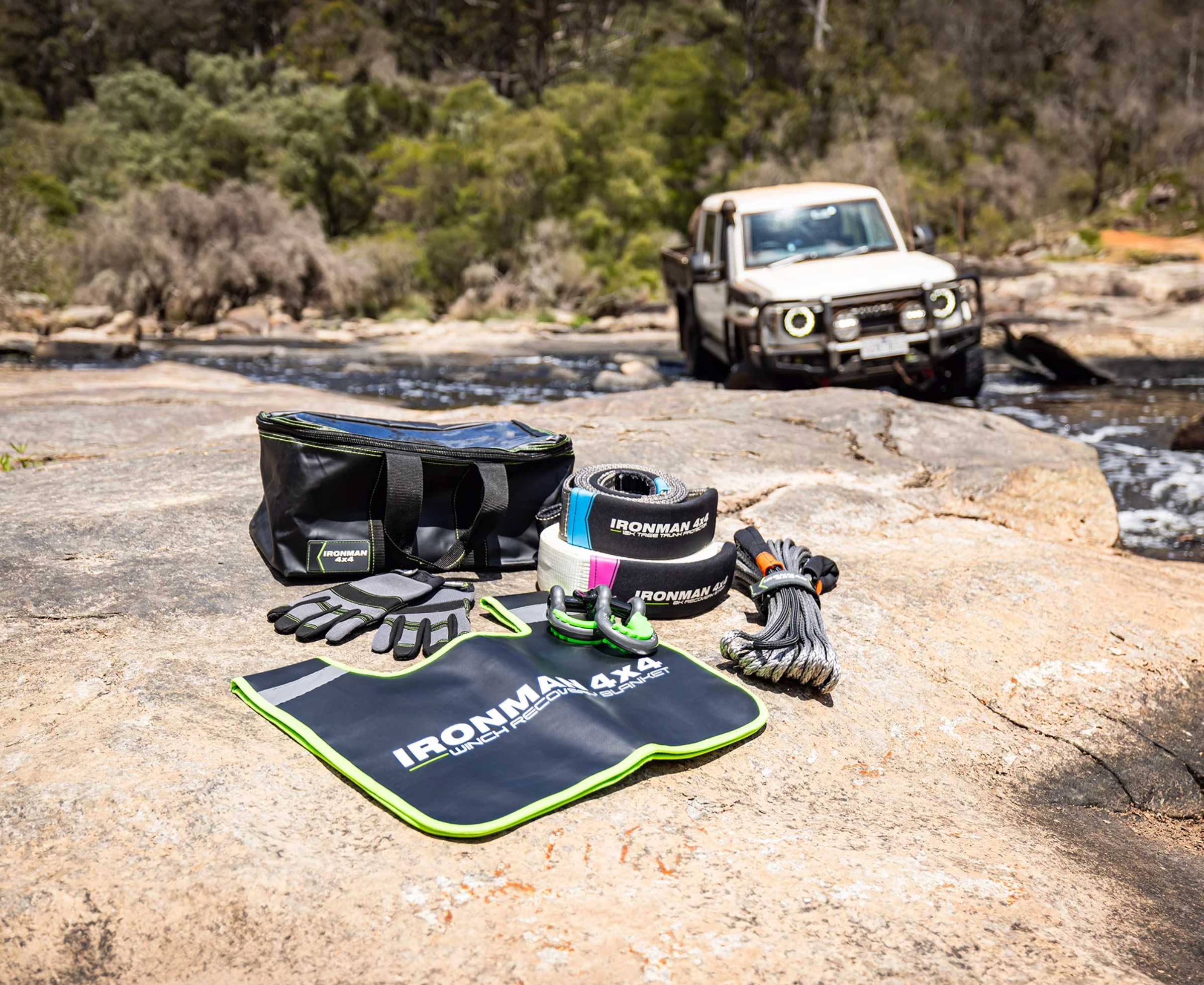
In these situations, having the right gear can make recovery much easier and help keep you safe. A comprehensive recovery kit includes all the essential tools and equipment needed to get a vehicle out of trouble efficiently.
To further boost your recovery capabilities, consider adding traction boards to your setup. They provide excellent grip and support, making it easier to free a vehicle stuck in mud, sand, or snow. Used alongside a recovery kit, they help you handle unexpected challenges on any trip.
It’s also worth upgrading from traditional steel bow shackles to rated soft shackles. These are significantly lighter and come with enhanced safety features, reducing the risk of injury if a break occurs. By investing in quality recovery gear, you’ll ensure a smoother, safer off-roading experience, no matter what obstacles you encounter along the way.
Well-stocked first aid kits should always be essential components of your preparedness setup. These kits not only provide immediate assistance in case of injuries or emergencies but also ensure that you are adequately equipped to deal with potentially life-threatening situations, such as snake bites.
Having these items easily accessible can significantly increase your chances of staying safe and managing any unforeseen circumstances effectively. Whether you’re venturing into the wilderness, exploring remote areas or simply preparing for unexpected events, taking the time to prepare these kits can be invaluable. Remember, first aid preparedness is a critical part of any survival plan.
If your Easter adventure leads you to a remote and picturesque destination, having a Personal Locator Beacon (PLB) becomes absolutely essential. In situations where lives might be at risk due to unforeseen circumstances, the PLB serves as a vital safety tool.
Accommodation and shelter
A good night’s sleep is not just a luxury, it’s a vital part of any outdoor adventure.
To ensure you wake up refreshed and ready for the day’s adventures, invest in a high-quality swag or a spacious rooftop tent. Both options offer maximum comfort and reliable protection against the unpredictable elements of nature.
When choosing the right shelter, look for durable, easy-to-set-up designs that suit your style of camping; whether you prefer something simple and budget-friendly or a more innovative setup that speeds up pitching and packing.
You can also enhance your camp with a 270-degree awning. It provides plenty of shade during hot afternoons and reliable cover in the rain, making your campsite comfortable and enjoyable no matter what the weather throws at you.
The Easter holidays are looming, providing the perfect opportunity to stretch your four-wheel drive’s legs on an off-tarmac adventure.
The “official” break is only four days, so that puts limitations on where many of us can point our 4x4s. So we’ve compiled a list of destinations that are close(ish) to the capital cities, so that you’ll get there within a few hours and have plenty of time to enjoy the trip.
The beauty of some of these destinations is that you can also enjoy them as a day trip, so that you’re back home before the sun dips below the horizon. Let’s crack into it!
Brisbane, Queensland
Moreton Island
Located just 40km from the centre of Brisbane, Moreton Island is a haven for four-wheel drivers, anglers and bushwalkers. Of course, experience driving on sand is essential, as there are no sealed surfaces on the island – and always be aware of the tide! There are five campground sites in total, as well as another five camping zones.
A beach access permit is required, and Moreton Island can be reached by ferry, barge or boat – the MICAT ferry is your only means of transportation when touring with a 4×4. The ferry leaves from the Port of Brisbane and drops travellers off on the beach just north of the Tangalooma Island Resort.
Plenty of families take the trip to explore the many shipwrecks on the western side (18 in total), as well as to get up close with the area’s many dolphins. No matter your age, there are countless experiences to be had on the island; but whatever you choose to do, make sure you visit Tangalooma Wrecks, the Champagne Pools and the Moreton Island Lighthouse.
North Stradbroke Island
Known as Straddie to the locals, North Stradbroke Island is another quintessential sand-driving experience. Much like Moreton, Straddie offers swimming, surfing, fishing and plenty of off-roading – there’s even a golf course. Track difficulty varies depending on the route, with plenty on offer for both novices and experienced steerers.
Tripod Track is a great 4×4 route that strikes through the densely vegetated centre of the island, and it stops off at Tripod Lookout (worth it for the views it provides of the island). It’s a difficult trip, so only embark on it if you’re proficient at four-wheel driving. Just like Moreton, you’ll need a beach access permit, and you’ll need to follow strict rules about where and when you can drive – there’s no 4×4 access either side of high tide, for example (fines apply).
The ferry to reach the island is located about 40 minutes east of Brisbane at Cleveland, with the ferry itself taking about 25 minutes to reach the island.
Sydney, NSW
Abercrombie River National Park
At around 3.5 hours from Sydney, Abercrombie River NP is located in the NSW Central Tablelands and is perhaps a tad too far to be an ideal day-trip destination. Still, it’s known for its challenging off-roading, and with some of the steepest 4×4 tracks in the state, it’s a great option for a long-weekend getaway.
Most of the perfect views, remote attractions and riverside campsites are accessible via 4×4 tracks, so you’ll need to be proficient behind the wheel to reach them and a 4×4 is (clearly) essential. However, some sections of the park can be accessed in 2WD. To ease into it, the western access point leads to the tamer routes, but head to Felled Timber Road on the east side if you’re up for a fight.
There are four campsites within the park including the Beach and Silent Creek (both crackers) and an ideal time to visit is either during Spring or Autumn.
Coolah Tops National Park
If you thought Abercrombie was too far, Coolah Tops National Park is even further from Sydney – about five hours’ drive via the town of Coolah. However, that distance and the fact the park isn’t as well-known means it’s probably going to be quieter for a four-day jaunt.
The 4×4 tracks within the park aren’t difficult but lead to some amazing look-outs and through dense, lush forest with giant snow gums and waterfalls. With numerous trails throughout the park, it’s no surprise that bushwalkers and mountain bikers love to explore the area. Wildlife and birdlife is also prevalent in the area, with wallabies, eagles and owls often sighted.
The park sits between the Great Dividing and Warrumbungle ranges and there are three campgrounds within the park. You can also rest for the night at the rustic and historic Brackens Hut, situated on a grassy flat between the open forest.
Melbourne, Victoria
The Otways
The Otways, which comprises Great Otway National Park, Anglesea Heath and Otway Forest Park, is within a stone’s throw from Melbourne via the popular Great Ocean Road. Running alongside the Bass Strait, the mountainous forest is abundant with waterfalls, lakes, picturesque campsites in the forest or along the coast, bushwalking trails and, of course, plenty of 4×4 tracks.
Denham Track is a popular choice for tourers as it can be challenging at stages and does require the use of low range. However, remember to keep in mind that seasonal road closures are implemented – in 2024, Denham Track was closed from 13 June until 31 October. It’s open for Easter, though!
Various campsites are located within the Otways including Hammonds (quite popular but has basic facilities), Big Hill (more remote, with great views) and Jamieson Track Campground (secluded, as it can only be accessed with a 4×4 vehicle). The most popular access point is at the coastal town of Anglesea, and there are no shortage of sites to explore over the Easter break.
Grampians National Park
Located approximately three hours’ drive from Melbourne CBD, the Grampians is loaded with sights and hidden treasures for four-wheel drivers, rock climbers, hikers and cyclists. The views over the mountain ranges are breathtaking and are simply worth the drive out there alone.
Four-wheel drive tracks within the Grampians include Mount Zero Road, Victoria Range Track and Launders Track, if you’re up for a challenge. Again, remember to research road closures in advance. Popular destinations include MacKenzie Falls – one of the largest waterfalls in Victoria – and Beauchamp Falls (both accessed by short, scenic walks).
Grampians NP is best accessed from Halls Gap at the northern end of the park, which is another ideal spot to spend a night or two if camping isn’t your thing. The small town has a general store, accommodation, fuel and a great bakery.
There are plenty of campsites within the park’s boundaries including Lake Bell Campground and Halls Gap Campground; some are easy while others can be harder to reach. All are unpowered but include toilets and fireplaces. Plan ahead as you’ll need to reserve a spot online before you travel.
Adelaide, South Australia
Ngarkat Conservation Park
Just over three hours’ drive west of Adelaide along the Mallee Highway, Ngarkat Conservation Park provides a generous sample of outback touring. Scattered with sand dunes, mallee scrub and heathlands, this desert destination features 11 campground sites of which most are accessible by 4×4 only.
The challenging Border Track is the park’s most famous attraction and is well worth adding to the bucket list. The track is typically accessed from the north near Pinnaroo and it follows the border that straddles South Australia and Victoria. It’s an extremely popular route due to its true outback style of adventure, and it’s only recommended for experienced off-road steerers. Other tracks within Ngarkat Conservation Park include Centre Track and Mount Shaugh Track – plus it’s only a relatively short detour to reach Victoria’s Big Desert Wilderness.
While predominantly a haven for 4×4 exploration, there are some alternative activities to do within the park such as hiking and bushwalking, including the Tyms Lookout Hike.
Little Dip Conservation Park
Little Dip is located just two kilometres south of Robe, an iconic coastal town that takes about 3.5 hours on bitumen from Adelaide.
Definitely spend a day exploring Robe before lowering tyre pressures and venturing down the Limestone Coast to Little Dip Conservation Park. For a park that is small by comparison to others on this list (just 21.5 square kilometres), Little Dip packs in plenty including fishing, 4×4 touring, hiking, kayaking, swimming, surfing and camping at a handful of stunning sites.
The beach driving is extraordinary, and the sand tracks that offshoot from the beach can be equally challenging. Always remember to lower tyre pressures (and re-inflate when back on tarmac). There are four campgrounds within Little Dip – Long Gully, The Gums, Old Man Lake and Stony Rise. All of these sites are positioned close to the beach, so views will be abundant but resources will be limited.
Perth, WA
Walyunga National Park
It may be well-known as a perfect day-trip destination for Perth locals (it’s only 30km from Perth), but you could easily fill up a long weekend at Walyunga National Park. Four-wheel drive touring is in the easy category, and there are definitely better parks from a driving perspective, but the park makes up for it with its access to the Swan River and the swimming, paddling and fishing it allows.
It’s also a bushwalker’s paradise, with myriad trails winding through the park all leading to breathtaking, tranquil views. Trails include the 5.2km Syd’s Rapids Trail; the 11km Echidna Trail; the 4km Kingfisher Trail; and the 4km Kangaroo Trail. Tourers are also inclined to load a kayak or canoe on the roof racks so they can enjoy a paddle along the Swan.
A small, basic campground near the Swan River contains firepits and picnic facilities, but it does get busy during peak times.
Leeuwin-Naturaliste National Park
A popular haven for Perth residents, Leeuwin-Naturaliste is a massive National Park that lures visitors with a passion for surfing (world-class surf spots include Margaret River, Guillotines and South Point), swimming, diving, hiking, cycling, camping and fishing. Of course, it also entices 4×4 tourers thanks to its combination of sand dunes, beach driving along the Indian Ocean and forest tracks.
Four campgrounds are available – with varying levels of demand – but no doubt they’ll fill up quickly over the long weekend. These include Boranup, Point Road (4×4 access), Conto and Jarrahdene. The 4×4-only Point Road track is located on the edge of the Boranup Karri Forest and is a moderate to challenging route where low range is required.
Much like Walyunga National Park, Leeuwin-Naturaliste is also popular with kayakers and canoeists, while caving and abseiling are also popular in the area.
Hobart, Tasmania
Tarkine Wilderness area
Due to the small size of Tasmania, every destination could be considered “close enough” to the capital city of Hobart for a long weekend getaway. The wild west coast of Tasmania, notorious for its epic off-roading, is one such destination. It’s approximately a five-hour slog from Hobart, so you’re better off heading there from Devonport, where it takes about 2.5 hours behind the wheel.
The Tarkine Wilderness area is abundant with dense, ancient rainforests, eclectic wildlife and sweeping vistas at every turn. It’s also home to the famous Climies Track, a bucket-list 4×4 adventure known for its extreme difficulty and steep, slippery terrain. The remote trek covers a variety of terrain including loose gravel, mud and big boulders, and it’s almost impossible to conquer in the wrong conditions. It’s a relatively short trail, all things considered, but the memories will last.
Mount Wellington
A helluva lot closer to Hobart than the Southwest Wilderness region, Mount Wellington is only 30 minutes’ drive on the blacktop.
Also known as Kunanyi, the area provides the opportunity to head to the summit and be back home by lunchtime. Heading along the Kunanyi Summit Road will take you to the summit, resulting in beautiful panoramic views of Hobart and the Derwent River. However, if you want to enjoy some 4×4 action, there are several tracks that offshoot from the main road and venture into more isolated parts of the mountain.
Bushwalking and hiking are also popular on trails including the 21km Pinnacle Track, or the brief 2.5km Organ Pipes Track. The area also has several sites of cultural significance which can be explored.
Darwin, Northern Territory
Litchfield National Park
Located just over an hours’ drive from Darwin, Litchfield is packed with challenging 4×4 tracks to experience over the Easter break. A bite-sized sample of the nearby Kakadu NP, Litchfield is ideal for those who are short on time. The 4×4-only Greenant Creek Track includes numerous water crossings and is loads of fun, swaying from challenging to easy-going. The Reynolds River crossing is another unmissable section, famous for its winding path across the wide waterway.
Swimming in the park is generally forbidden due to saltwater crocodiles, but famous attractions such as Florence Falls, Buley Rockhole, Tolmer Falls and Wangi Falls in the park’s north-west corner do offer safe swimming spots in the pools at the base of waterfalls – but always check first.
Outdoor enthusiasts also enjoy the many hiking and walking trails – the 39km Tabletop Track is a popular multi-day hike – and campers can set up at many camping areas in the park including at Wangi Falls, Tjaynera Falls and Surprise Creek Falls.
Nitmiluk National Park
It’s a longer drive from Darwin compared to Litchfield, but Nitmiluk National Park – about three hours’ drive south of Darwin – is rich in cultural history and is an ideal destination for a long-weekend escape.
Your 4×4 skills won’t be put to the test here as the tracks are all subdued, but the scenic views and comfortable campgrounds make for a memorable getaway. The Katherine Gorge (also known as the Katherine River) is the centrepiece of the park, with canoes and kayaks endlessly exploring this beautiful landscape. Campsites trace the river’s course, and there are plenty of swimming spots along the way. Boat tours also run daily.
For keen hikers, the four-day Jatbula Trail is perhaps the most popular within the park, while Edith Falls Walk in the north of the park leads to great swimming spots in the upper and lower pools.








Hyundai is shaking up the off-road scene with its Boulder concept, unveiled at the 2026 New York Auto Show.
This rugged concept shows the brand is no longer content with city-friendly crossovers – it’s now turning its attention to enthusiasts who demand serious four-wheel-drive performance.
The Boulder rides on a robust body-on-frame chassis, reportedly the same foundation that Hyundai plans to use for a new mid-size pickup, expected to hit production by 2030.
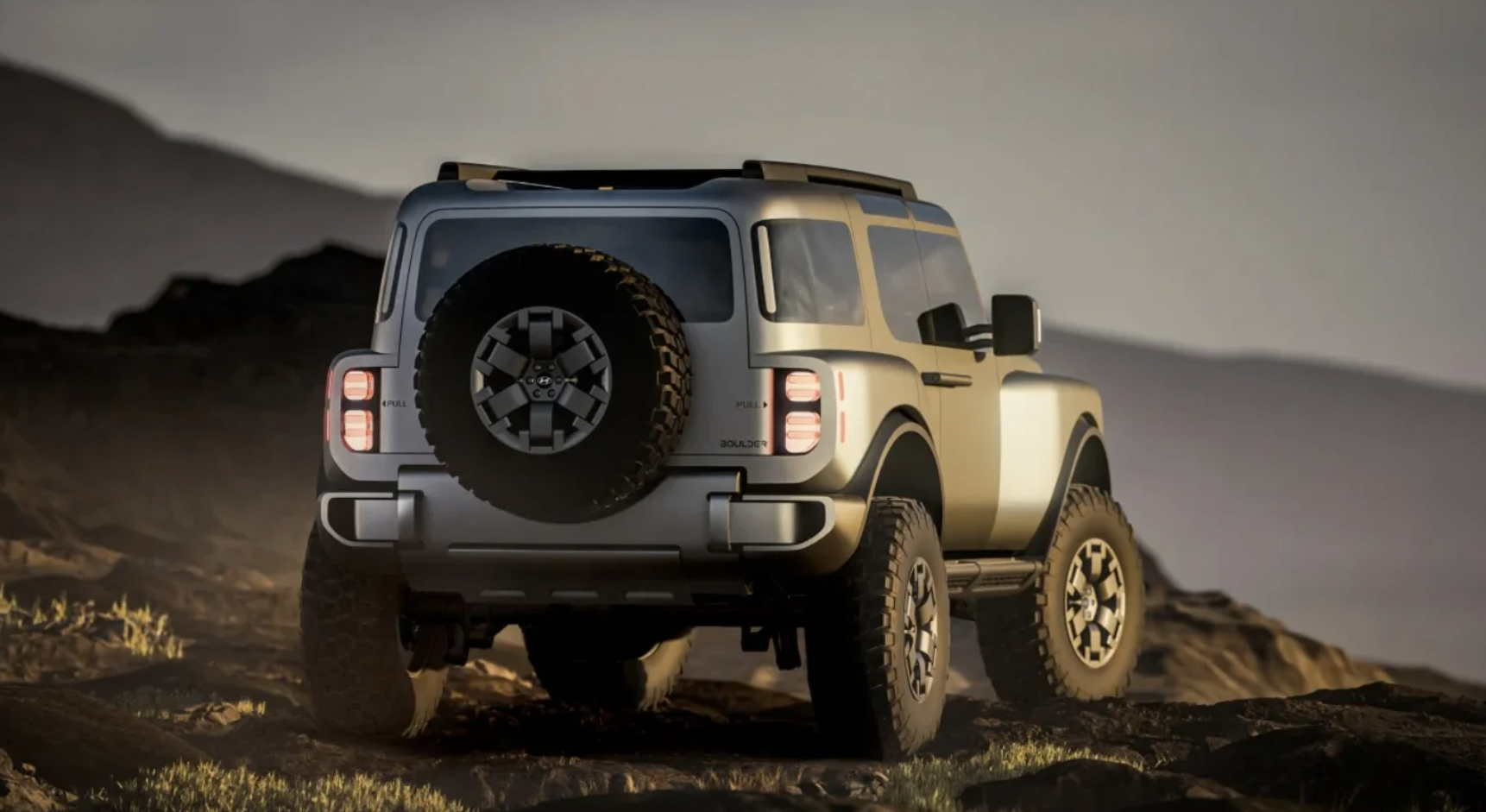
Despite massive 37-inch tyres, high ground clearance, and a tall stance, some elements will most likely be toned down for production – but the concept’s aggressive proportions and off-road-ready hardware give a clear picture of what’s to come.
Styling is a departure from Hyundai’s usual clean SUV lines. The Boulder sports wide arches, distinctive roof glass, and a wraparound rear window, giving it a bold, modern edge without losing its rugged, purpose-built character. Inside, the cabin is functional, with small digital screens and tactile controls for 4×4 functions.
Development of the Boulder platform is taking place in the United States, with both SUV and ute versions slated for American production. There’s no indication on an Australian release, but the popularity of off-road vehicles here suggests a strong potential market.
Mitsubishi has locked in pricing and updates for the 2026 Triton range, with the revised ute set to arrive in Australia in May.
The line-up opens at $44,440 (RRP) for the GLX single-cab chassis, with the GLX dual-cab pick-up priced from $51,640. At the top end, the GSR dual-cab pick-up lands at $65,590.
For 2026, reworked suspension has been applied across the range. Up front, Mitsubishi has introduced a lower spring rate and rubber body mounts, while new high-response ‘Various Performance Setting’ valves have been added to both front and rear shock absorbers. The rear dampers also increase in diameter to improve control. GLX and GLX+ variants continue with a heavy-duty four-leaf rear suspension, while GLX-R, GLS and GSR models retain a three-leaf arrangement.
The flagship GSR picks up additional hardware, now equipped with YAMAHA Performance Dampers mounted across the front and rear of the chassis. The system is designed to improve body control and steering response, while boosting high-speed stability and reducing vibration and cabin noise for smoother performance.
Tech has also been expanded at the top of the range, with Mitsubishi Connect introduced on the top-spec GSR. The system uses an embedded telematics control unit with 4G connectivity via the Telstra network, and includes SOS emergency assistance, breakdown call functionality and remote vehicle access through the My Mitsubishi Connect mobile app, with safety and security services available around the clock.
“Triton has long been a key link to our brand in Australia. It represents impressive capability, strong value and a dedication to reliability and aftersales support that is second to none,” said Bruce Hampel, MMAL GM of Product Strategy.
“The latest range of model year updates further strengthen these values, with refined specifications including new suspension componentry that is applied across the range, making this Triton more refined than ever, while still retaining impressive strength and durability.
“GSR also evolves with the key addition of Mitsubishi Connect, for the first time on Triton, while the introduction of the YAMAHA Performance Damper adds even further refinement with a new level of chassis control,” he said.
The Triton powertrain continues unchanged, powered by a 2.4-litre bi-turbo diesel four-cylinder producing 150kW and 470Nm.
2026 pricing
| Grade | Drive | Transmission | Body Style | Price (RRP) |
|---|---|---|---|---|
| GLX | 4×4 | 6AT | Single Cab Chassis | $44,440 |
| GLX | 4×4 | 6AT | Club Cab Chassis | $47,590 |
| GLX+ | 4×4 | 6AT | Club Cab Pick-Up | $50,690 |
| GLX | 4×4 | 6MT | Dual Cab Chassis | $47,940 |
| GLX | 4×4 | 6AT | Dual Cab Chassis | $50,190 |
| GLX | 4×4 | 6AT | Dual Cab Pick-Up | $51,640 |
| GLX+ | 4×4 | 6AT | Dual Cab Chassis | $52,690 |
| GLX+ | 4×4 | 6AT | Dual Cab Pick-Up | $53,990 |
| GLX-R | 4×4 | 6AT | Dual Cab Pick-Up | $57,440 |
| GLS | 4×4 | 6AT | Dual Cab Chassis | $58,590 |
| GLS | 4×4 | 6AT | Dual Cab Pick-Up | $60,140 |
| GSR | 4×4 | 6AT | Dual Cab Chassis | $62,590 |
| GSR | 4×4 | 6AT | Dual Cab Pick-Up | $65,590 |
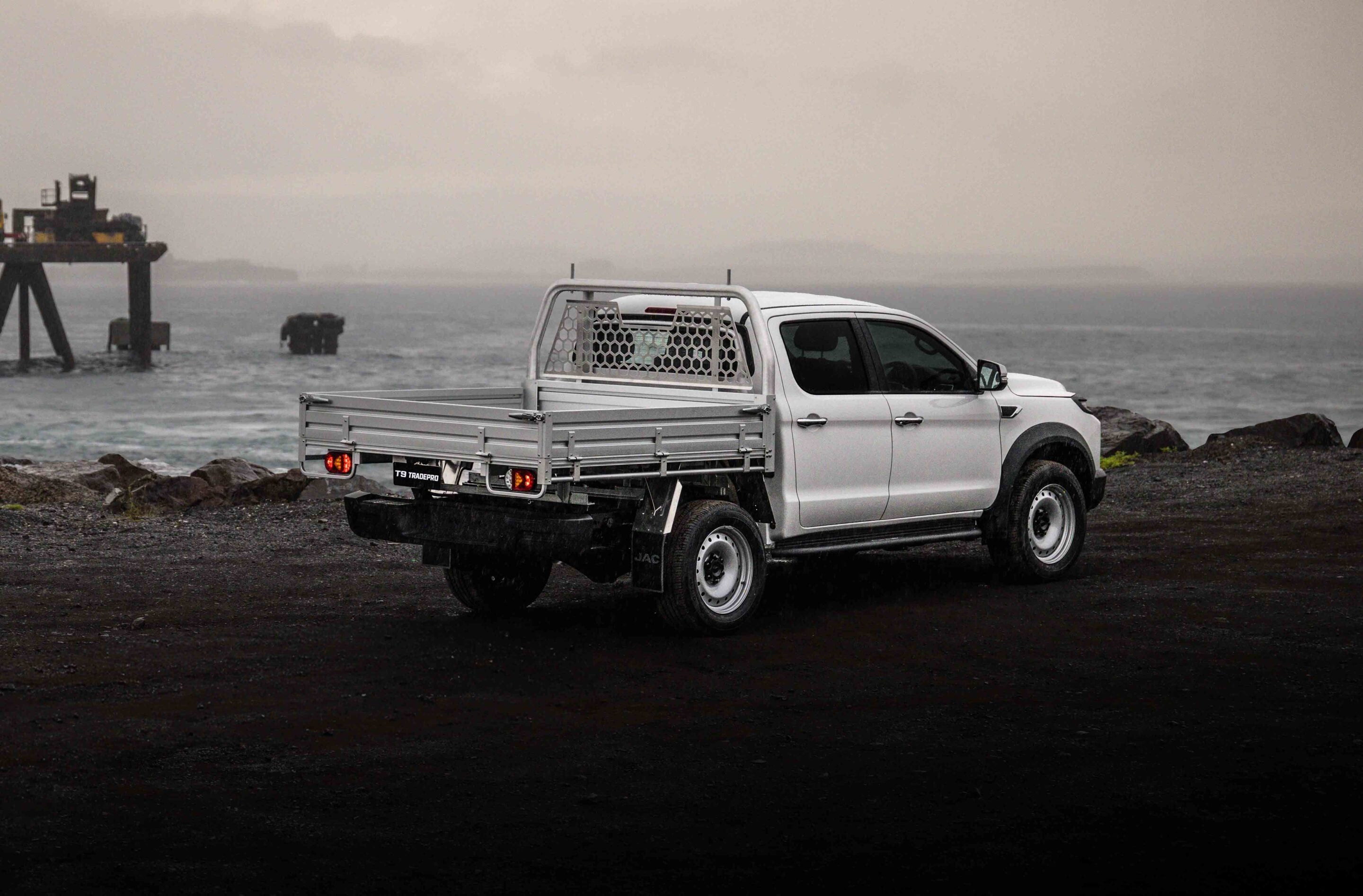
JAC has launched the T9 Tradepro Cab‑Chassis, now available from $38,990 plus on‑roads. The entry‑level T9 is aimed squarely at tradies, farmers, fleet operators and small business owners.
For ABN holders, JAC is offering an exclusive drive‑away price from $40,990 ($41,990 in WA), which includes a free JAC Genuine Alloy Tray with fitment. This limited‑time offer is available on new T9 Tradepro stock to eligible ABN holders until April 30, 2026, or while stocks last from participating dealers.
The T9 Tradepro features an open platform for custom trays, toolbox fit‑outs or other body modifications. Standard specifications include:
- 18‑inch steel wheels
- 4×4 with rear differential lock
- Heavy‑duty fabric seating
- 1165kg payload (excluding tray)
- 3.2-tonne braked towing capacity
- 7.6L/100km fuel consumption (NEDC combined)
- Rear camera
- Apple CarPlay and Android Auto
- Wireless phone charging
- Keyless entry and push‑button start
“The T9 Tradepro Cab-Chassis is exactly what we set out to build – a serious work vehicle that doesn’t ask tradies to pay for things they don’t need, or go without the things they do,” said Ahmed Mahmoud, JAC Motors Australia Managing Director. “Combining that with our ABN driveaway offer makes this one of the strongest value propositions in the segment right now.”
The T9 is powered by a 2.0‑litre turbodiesel producing 125kW and 410Nm, paired with a 4WD system featuring a BorgWarner dual‑range transfer case and locking rear differential.
JAC added the lifestyle‑focused T9 Osprey dual‑cabs to its Australian line‑up at the end of 2025. The standard Osprey starts at $46,629, with the darker‑trimmed Osprey X at $47,079. Both carry a 980kg payload to remain eligible for salary‑packaging and novated leases. They share the T9’s 2.0‑litre turbodiesel, ZF eight‑speed automatic and 4WD setup.
All models maintain a five‑star ANCAP rating and come with JAC’s seven‑year unlimited‑kilometre warranty, capped‑price servicing and 24/7 roadside assistance.
Last month, JAC also confirmed fuel‑efficiency and range figures for its upcoming Hunter PHEV, due in Australia mid‑2026. The Hunter is set to deliver a combined 1.6L/100km (NEDC) fuel consumption figure and 1005km combined driving range (NEDC), positioning it as a long‑range electrified option in the 4×4 ute segment.
It pairs a turbocharged petrol engine with dual electric motors and a 31.2kWh lithium‑iron phosphate battery, and it supports a 3.3kW vehicle‑to‑load (V2L) function for powering tools or gear.
Just about every motorist has (or should have) an understanding of the importance of running the correct air pressures in their vehicle’s tyres for on-road driving, no matter what type of vehicle they drive.
The correct tyre pressures ensure optimum vehicle performance in terms of traction, grip, ride quality and fuel economy, as well as optimum tyre life in terms of tyre wear across the tread face, as well as sidewall longevity. Throw off-road driving into the mix and the importance of setting the correct tyre pressures is even greater. Adjusting air pressure to suit different terrain types will not only improve vehicle performance and ride quality, and prolong tyre life, but it will also minimise track damage.
While many four-wheel drivers are well-versed in the need to lower tyre pressures for sand driving, many don’t understand the benefits of lowering pressures for driving on other surfaces such as gravel roads and dirt tracks, or through mud and over rocks.
Before we go any further, it should be noted that the recommended pressures listed in this guide are just that, recommendations. It should also be noted that these recommendations are for vehicles fitted with Light Truck (LT) construction tyres, which have a stronger carcass, both across the tread face and in the sidewalls, than the Passenger Car (P) rated tyres that are often standard fitment on many new 4x4s. Also bear in mind that heavily laden vehicles will need to run higher air pressures in their tyres than lightly laden vehicles will.
JUMP AHEAD
- Road pressures
- Gravel and dirt roads
- Rocky terrain
- Mud terrain
- Sand terrain
- Remember to reinflate
- Required equipment
- Expert opinion
- Tips and traps
- FAQs
Road pressures
To figure out a start point when it comes to setting the correct tyre pressures for on-road driving, just look at your vehicle’s tyre placard.
But bear in mind that while the tyre placard will list different tyre pressure recommendations for different OE tyre sizes, you might have to adjust pressures to suit aftermarket LT tyres if fitted. The placard will also likely list higher pressures for when the vehicle is carrying a load, and this is an important consideration, especially for 4×4 utes that have high payload capacities.
If a vehicle is carrying a heavy load, it might be necessary to run higher pressures in the rear tyres than the front. Likewise, a vehicle equipped with a steel bullbar, a winch and driving lights will likely need higher tyre pressures up front than what is listed on the tyre placard.
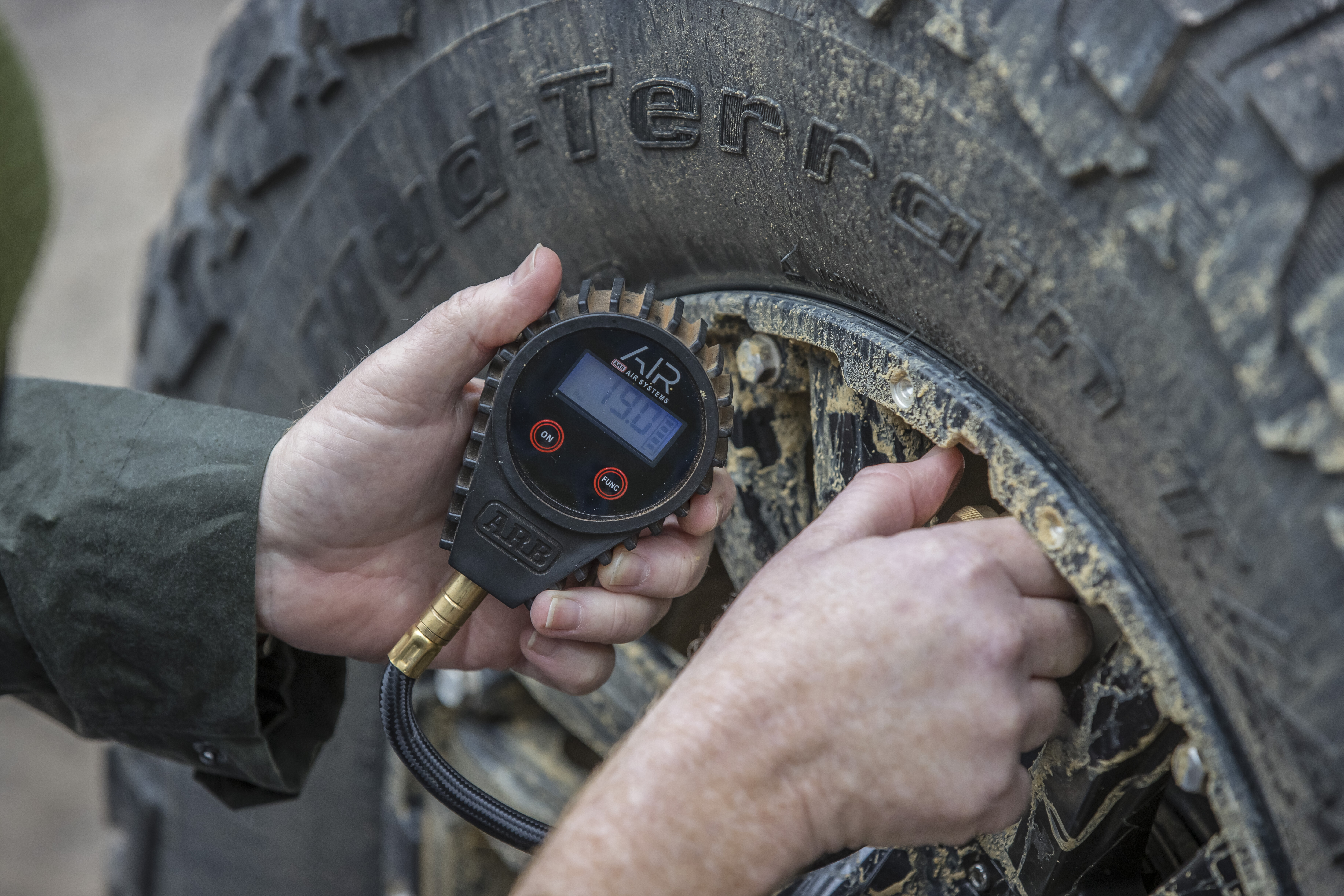
Figuring out the ‘perfect’ on-road tyre pressures to suit your vehicle is often a case of trial and error, and it will depend on how you want your vehicle to behave on the road in terms of ride quality, steering response and handling.
It is important not to go too extreme when adjusting tyre pressures for on-road driving. Go too low and the tyres will flex a lot in the sidewalls and generate too much heat, which can result in tyre delamination, which is essentially where the tyre separates in to its various components. Go too high with pressures and ride quality will suffer through a lack of sidewall flex, and the tyres will also be more prone to punctures.
Pressures also have a big effect on tyre life; overinflated tyres will wear prematurely in the centre of the tread area, whereas underinflated tyres will wear more on the outside of the tread area. With the right inflation pressures, the tyres should wear evenly across the tread face, assuming the wheels are correctly aligned and balanced.
Gravel and dirt roads
Driving on gravel roads and dirt tracks is very different to driving on sealed roads, so it’s important to adjust tyre pressures to suit the conditions.
For smooth and well-graded gravel roads on which you can easily maintain highway speeds, you might be able to stick to your on-road tyre pressures, but the loose surface will mean you have reduced traction and grip, resulting in compromised cornering capability as well as extended braking distances. Lowering tyre pressures results in a longer tyre footprint for improved traction and grip, and more flexible sidewalls for better ride quality.
How much should you lower tyre pressures? As a general guide, if you run 35psi on the road you might want to go down to 30psi on smooth gravel roads. And if the road surface deteriorates, you can lower pressures further still. From experience, I’d suggest somewhere between 32psi to as low as 26psi is suitable for rough gravel roads, depending on the load you are carrying.
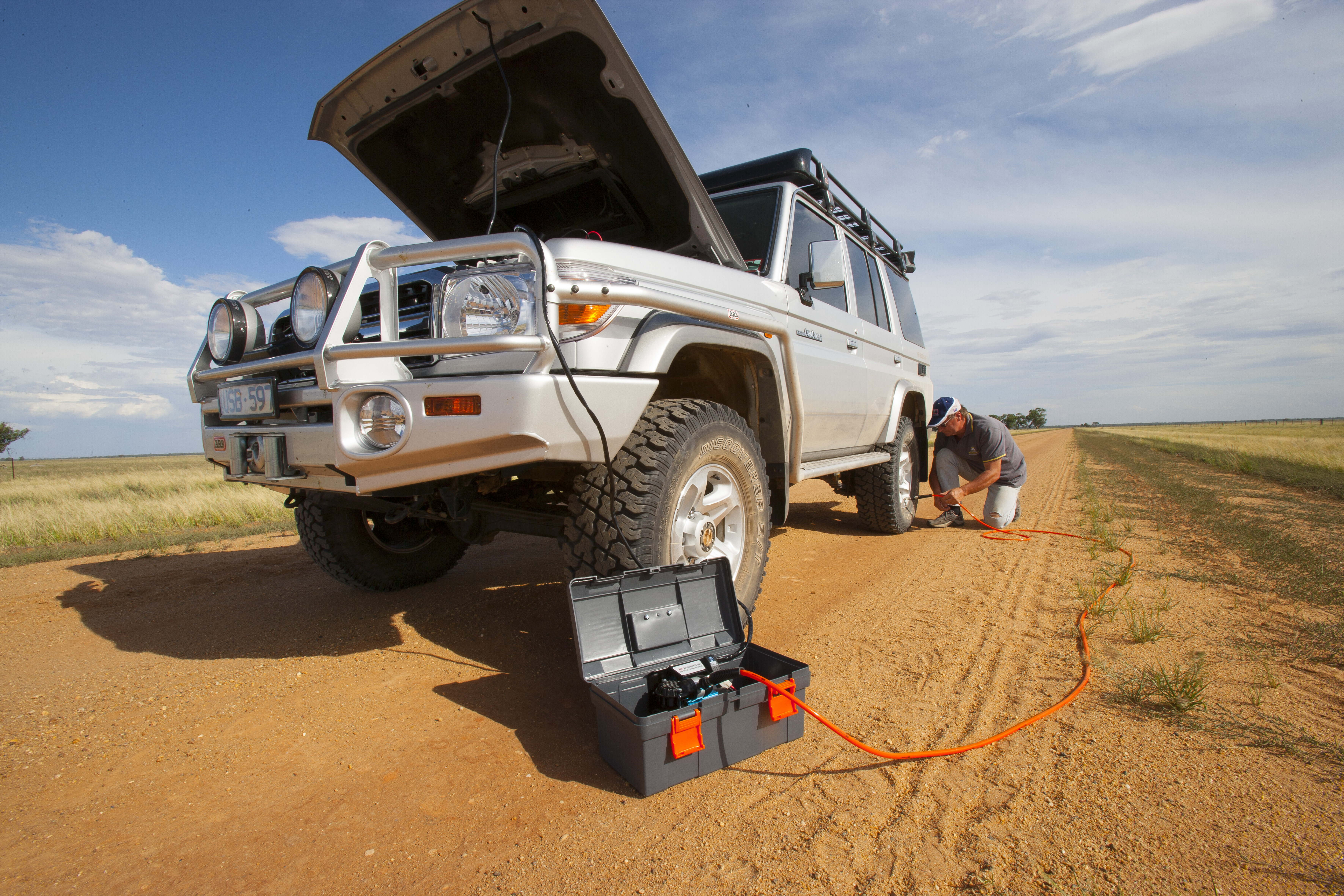
If for example, your on-road tyre pressures were at 38psi, drop to 32psi or so on rough gravel and see how the vehicle rides and handles. If you are running 35psi on the road, then maybe drop to around 26psi on rough gravel roads. You, your passengers and your vehicle will appreciate the many benefits of running lower tyre pressures on heavily corrugated roads.
The vastly improved ride quality you’ll experience by lowering tyre pressures is beneficial for the comfort of vehicle occupants and it makes driving less tiring. Lower pressures also minimise potential vehicle damage caused by incessant vibrations, and result in more grip, making the vehicle easier to drive. As well as offering better traction, grip and ride quality, lowering tyre pressures for gravel roads also reduces the risk of chipping across the tyre tread face, as the tyres are more flexible and therefore less prone to impacts from sharp stones and rocks.
Rocky terrain
Reducing tyre pressures in rocky terrain allows the tyres to flex, which means they can better conform to uneven terrain, in turn improving traction and reducing the chance of tyre damage.
As mentioned, lower tyre pressures also result in a longer tyre footprint, which means better traction. If you’re crawling over rocky terrain in low range, you can lower tyre pressures quite a lot, as heat generation from high-speed driving will not be an issue. How low? If you run tough LT tyres, 22psi is a good starting point for rock crawling, but make sure your throttle and steering inputs are gentle and well-considered, because abrupt acceleration or steering inputs can result in the tyres slipping on their respective rims, which can lead to deflation, or the tyres coming off the rims altogether.
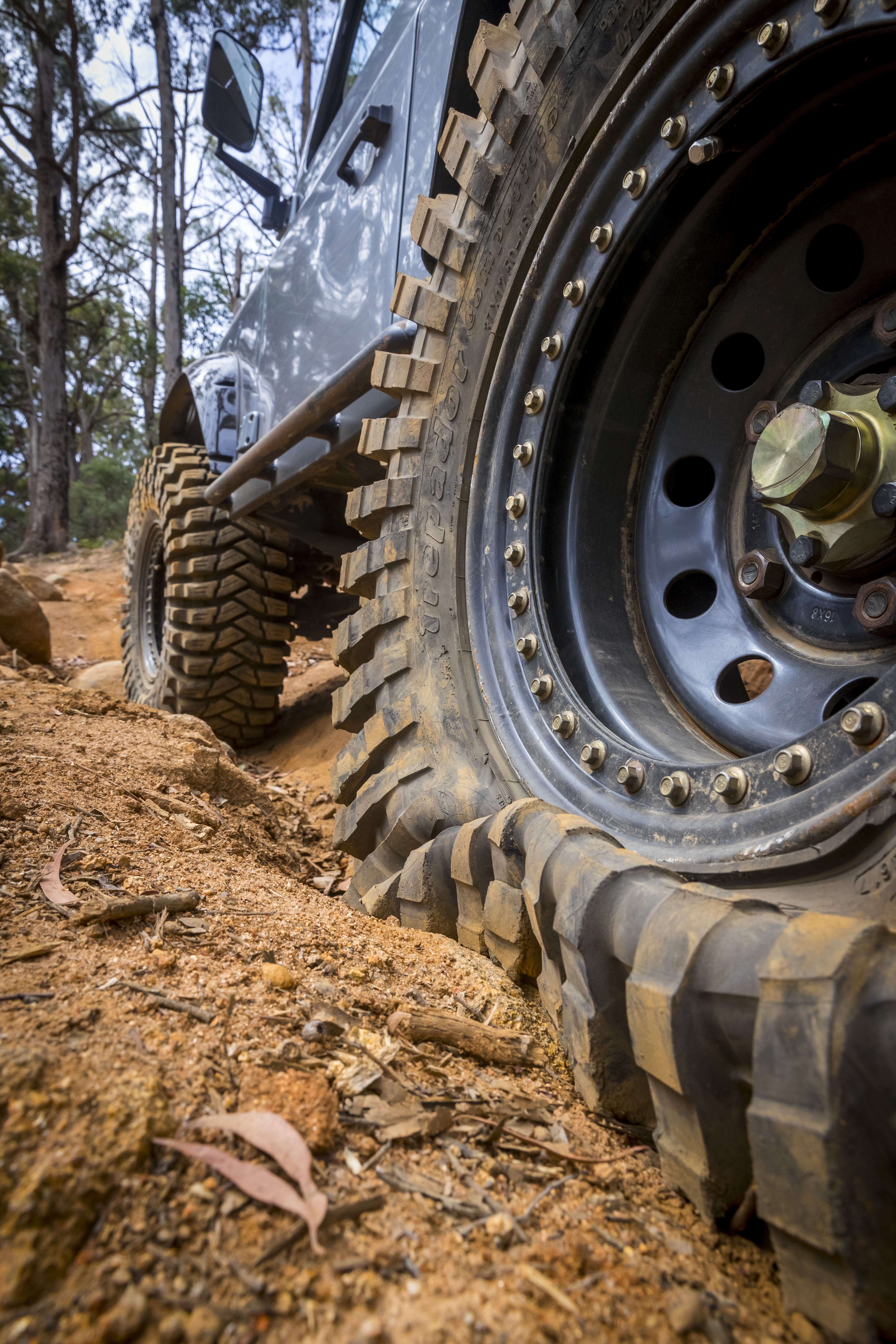
There is a downside to lowering tyre pressures in rocky terrain, and that is increased susceptibility to sidewall damage. As you lower pressures, the tyre sidewalls bag out, so make sure you keep an eye out for sharp rocks or protruding tree roots and the like in rocky terrain.When track conditions improve, remember to reinflate your tyres; as your speed picks up, so too will tyre temperatures, and therefore the risk of tyre damage.
Mud terrain
The right tyre pressures for mud driving depends on what type of mud you’re driving in.
What type of mud?! Well, if the mud is slippery and slimy on the surface, but you can feel a firm base underneath, then gravel-road tyre pressures (26 to 30psi) will allow the tyres to cut through the top layer and hopefully gain purchase on the firm base. If the mud is deep and gooey, and you can’t feel a firm base at all, dropping tyre pressures to as low as 22psi will hopefully give them a chance of gaining purchase in the slop, thanks to the resulting longer tyre footprint.
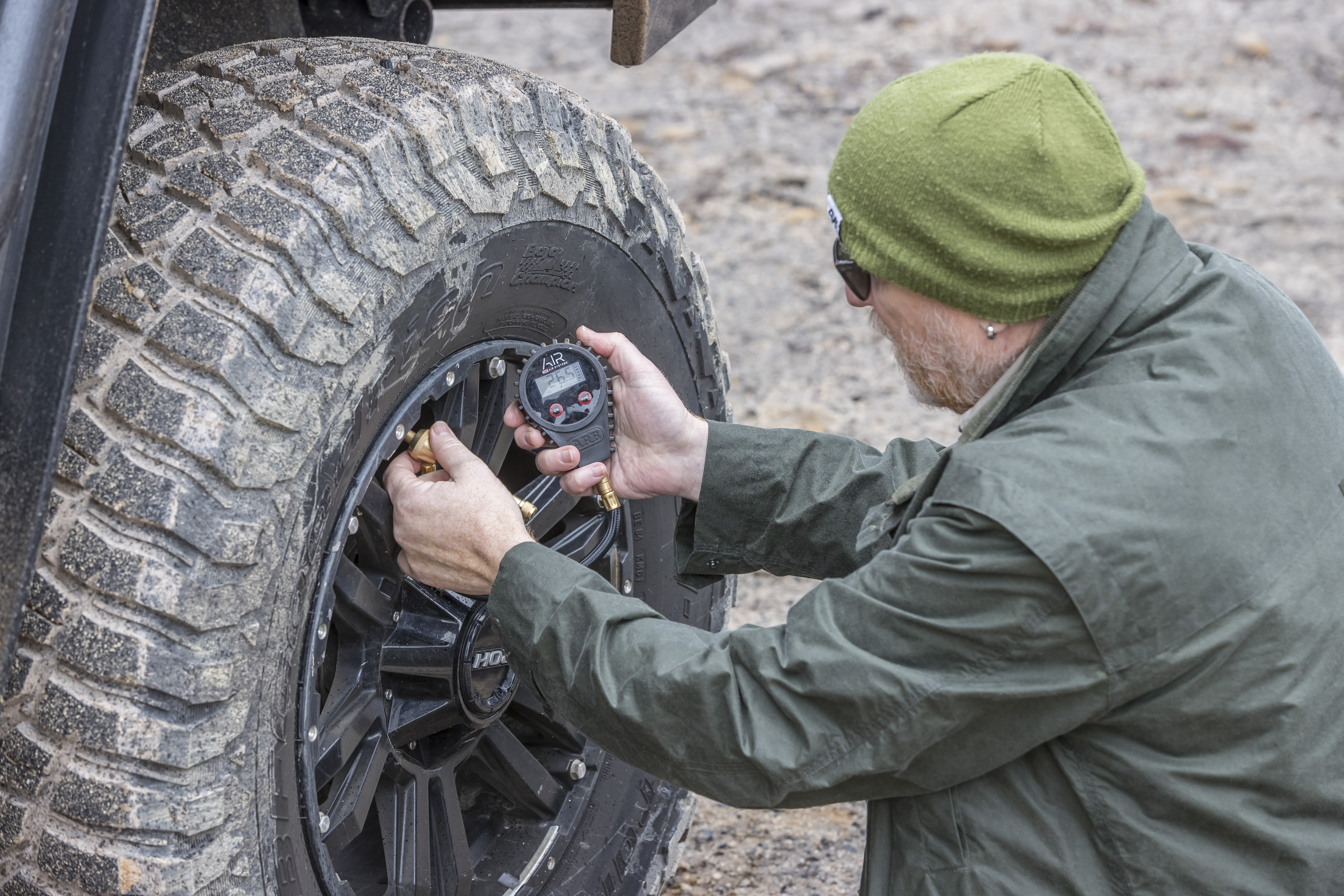
As with rock driving, if you have lowered tyre pressures significantly to get through mud, don’t make sudden throttle or steering inputs, as the tyre could slip on the rim or mud could work its way in between the bead and the rim, resulting in rapid tyre deflation.With bead-locks fitted, ensuring the tyres cannot slip or peel off their respective rims, you can drop pressures even further for mud driving, but check the legality of such devices in your state or territory before going down this route.
Sand terrain
Lowering tyre pressures for sand driving seems to be the one everyone knows about, but how low should you go, and why?
Let’s start with why. As already discussed, lowering tyre pressures increases the tyre footprint, and in sand this helps the tyres to float over the surface rather than dig in to it. So, how low should you go? In soft sand, you can safely drop tyre pressures to as low as 16psi without peeling them off their respective rims, so long as you don’t make sudden steering movements or corner at great speeds. And remember, don’t drive too fast on sand with low pressures as heat will quickly build up and cause tyre damage.
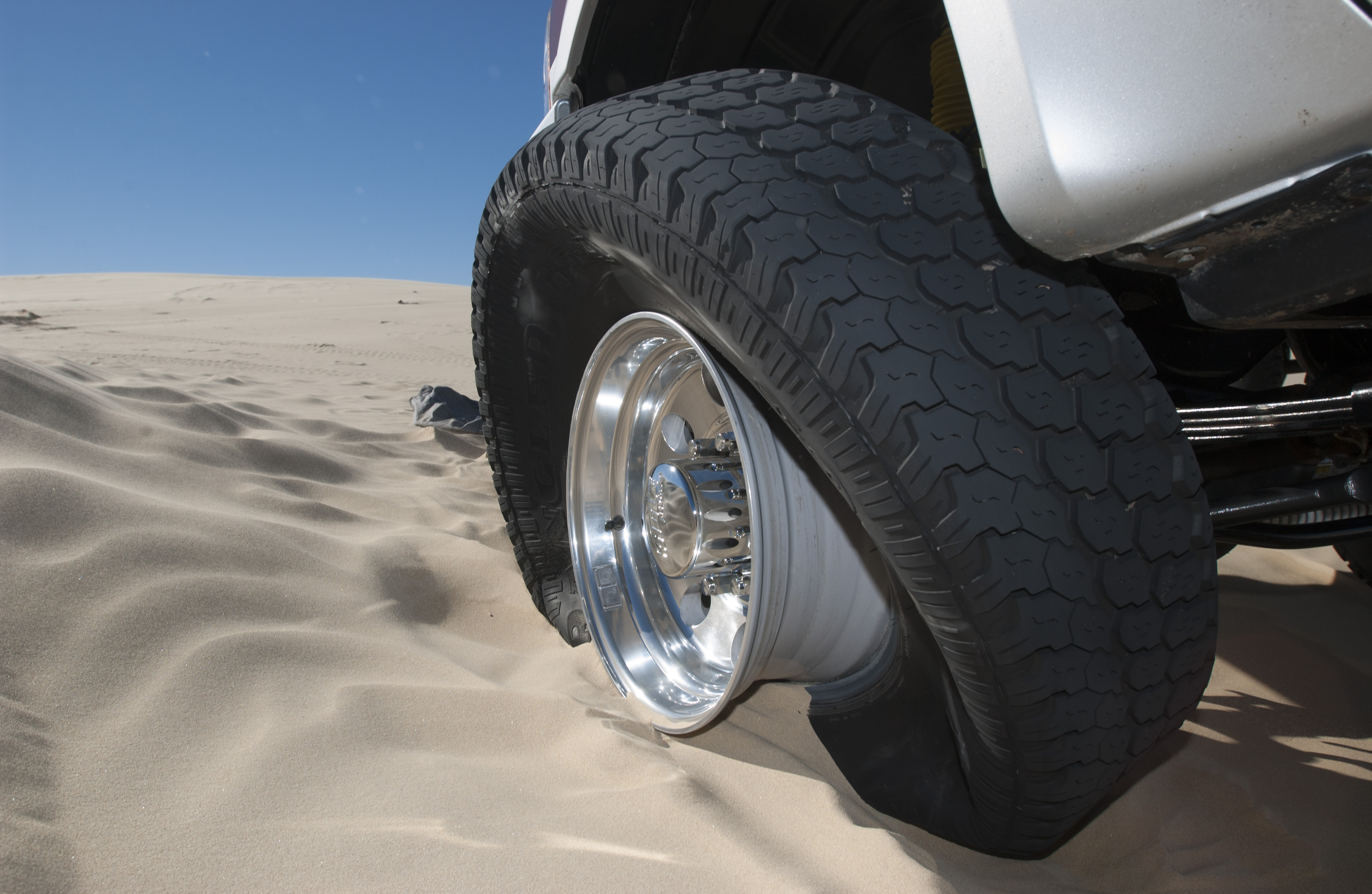
On harder-packed sand you might not have to lower pressures as much. You’ll figure it out as you go along by judging how easy or difficult it is to maintain forward progress; if it’s easy, don’t drop pressures too much, but if it feels like a hard slog, go lower.Dropping tyre pressures in sand not only reduces the chance of getting bogged, it also reduces the strain on your vehicle and it minimises the occurrence of track damage, so don’t be one of ‘those blokes’ who doesn’t feel the need to lower tyre pressures on sand.
Remember to reinflate
Make sure you reinflate your tyres to on-road pressures once you’re back on the blacktop.
While you’re pumping them up, have a good look over the tyres to see if there are any signs of damage, in which case you’ll have to repair or replace the tyre with a spare. Check the valve stems for leaks too, and make sure the dust caps are screwed back on once the tyres have been reinflated. If you only have a short distance of blacktop before you’ll be back on gravel again, you can maintain lower tyre pressures, but make sure you keep your speed down so your tyres don’t overheat.
Required gear
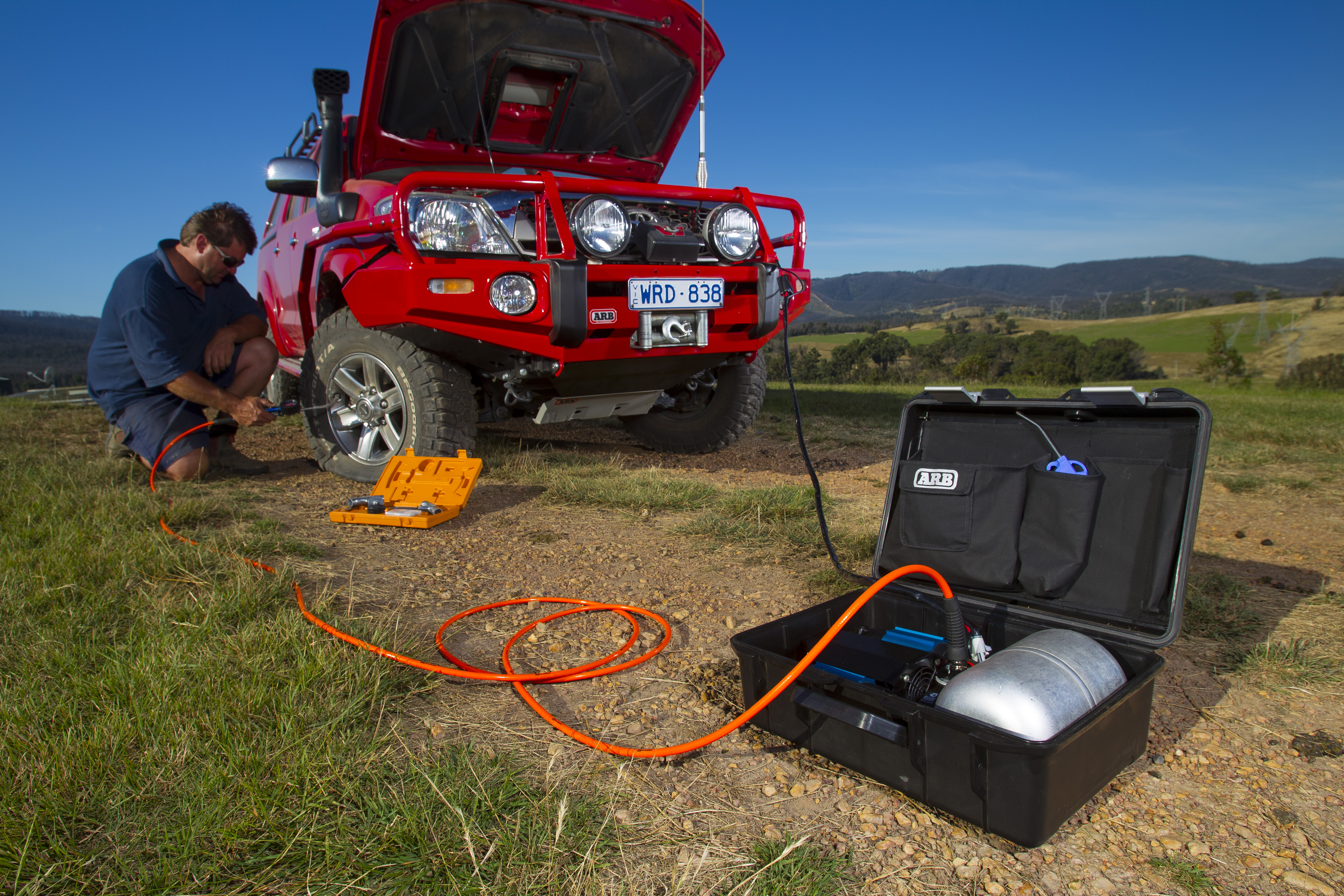
This is the gear you’ll need to regularly adjust tyre pressures to suit off-road terrain, and you should have in your kit in the case of tyre damage:
- Quality tyre pressure gauge
- Tyre deflator (or a stick if you’re in no rush)
- Reliable air compressor
- Tyre repair kit
- Spare tyre in good condition
- Functioning vehicle jack and wheel brace
- Tyre Pressure Monitoring System (TPMS)
Advice from a 4×4 expert
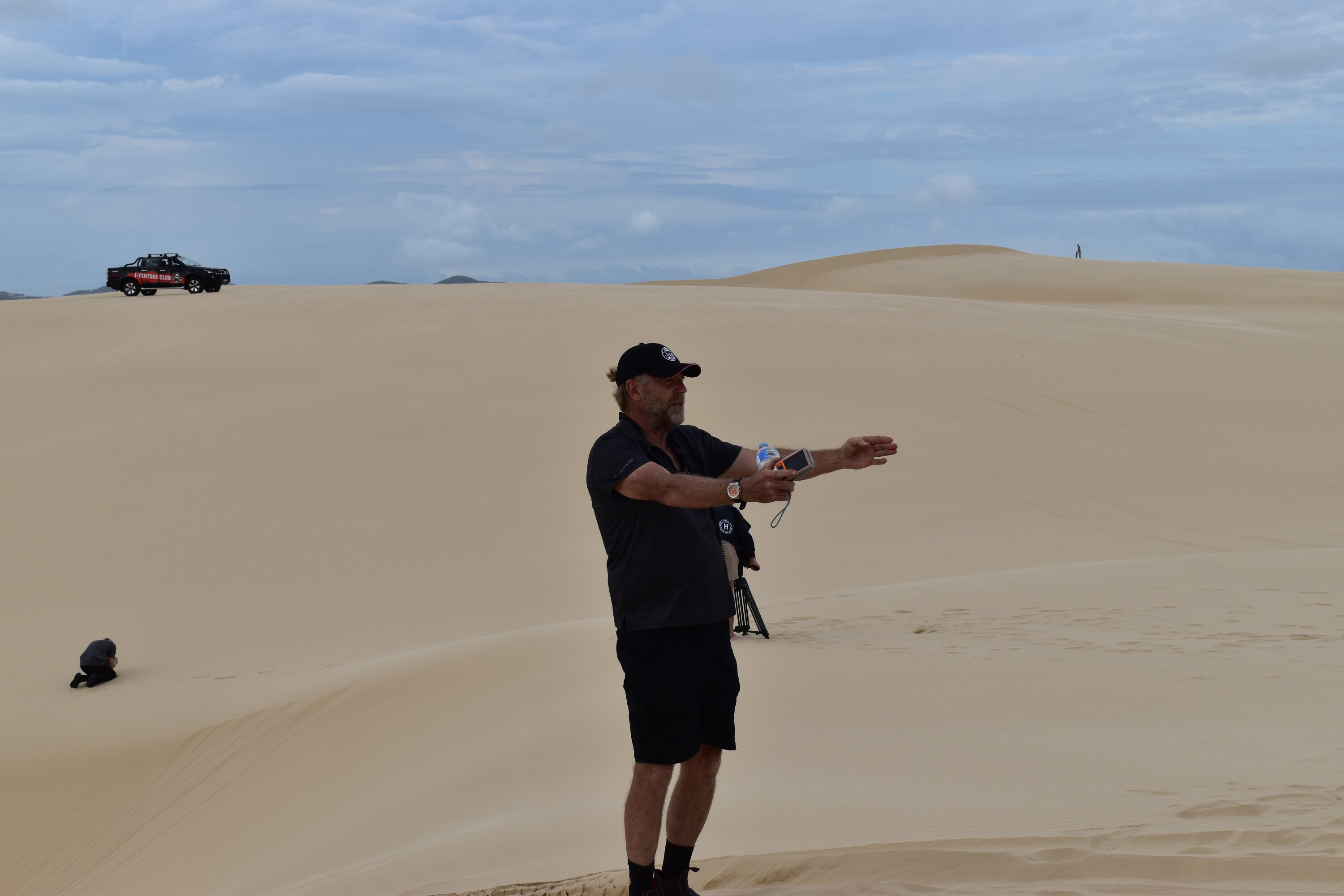
David Wilson has been a 4WD trainer since before Google was a thing. Here are his top five tips for managing tyre pressures:
- Start with your tyre placard: On bitumen, follow the tyre placard as your baseline. Most wagons and utes run 200–250 kPa (29–36 psi). Over-inflation wears tyres prematurely, increases puncture risk, and lengthens emergency braking distances.
- Follow the ‘20 per cent’ rule: On dirt roads, let out 20 per cent of the placard pressure and reduce speed by 20 per cent. This gives tyres flexibility to absorb bumps, reduces punctures, and improves comfort and braking.
- Keep adjusting down: As terrain gets rougher, gradually reduce pressure until traction and momentum return. Each reduction should be matched with a lower speed to avoid overheating tyres.
- Don’t go too low: Minimum pressure is 100 kPa (15 psi) except in emergencies. Below this, tyres can come off the rim, so steer, brake, and accelerate very carefully.
- Pump them back up: After off-road sections, restore tyres to the appropriate pressure for the surface. A fast air compressor and a reliable metal gauge make this quick and accurate.
Tips and traps
Tips
- Adjust pressures to suit terrain and vehicle load
- Fit LT tyres to your vehicle
- Regularly check tyres for damage
- Run a TPMS to warn of rapid deflation
- Remember to reinflate once back on the road
Traps
- Lower tyre pressures too much for conditions
- Drive too fast with lowered tyre pressures
- Make sudden throttle or steering inputs with low tyre pressures
- Leave your compressor and tyre repair kit at home
- Get lazy and forget to adjust tyre pressures
FAQs: Expert tips for off-roading
- How much should I air down my tyres?
The ideal pressure depends on wheel diameter, tyre aspect ratio, tyre type, vehicle weight, and terrain. Bigger wheels and low-profile tyres reduce sidewall height, limiting how much you can safely lower pressure. E-rated tyres are stiffer and better for heavier vehicles, while softer tyres work well for lighter rigs. Soft sand, snow, mud, and rocky trails all require different pressures.
Tip: Start with street pressure and gradually reduce it while monitoring tyre performance.
- Why is sidewall height important?
Lowering tyre pressure lets the tyre deform slightly, increasing the contact patch. On soft terrain like sand, snow, or mud, this improves floatation. On rocky trails, a softer tyre conforms to obstacles, giving better grip. Shorter sidewalls, which are common on large-diameter wheels, limit how low you can safely air down.
- What are the risks of airing down too much?
Lower tyre pressure increases the risk of losing a bead, damaging the tyre or rim, reduced ground clearance, and accidents or injury.
Tip: Air down slowly and in increments, especially on technical terrain.
- How do tyre types affect air-down performance?
Tyre load rating and construction matter. Choosing the right tyre type helps balance ride comfort, grip, and safety:- E-rated tyres: Stiffer sidewalls, higher weight capacity, better for heavier vehicles
- C-rated tyres: Softer, more flexible, better for lighter vehicles or technical off-road conditions
- What’s the best way to air down quickly?
A simple, low-cost method is to remove the valve core, which can drop a 35-inch tyre from 35 to 15 psi in under a minute. Always use a valve core tool and monitor pressure with a reliable low-pressure gauge. Carry extra valve cores and stems in case of loss or damage.
Tip: Reduce pressure incrementally to avoid sudden loss of control.
- How should I air up after off-roading?
Use a high-quality air compressor—electric or engine-driven—and check pressures with an accurate gauge. Multi-line inflation/deflation systems can make the process faster. Restoring tyre pressure after off-road sections ensures safety and prolongs tyre life.
- Are there any practical tips for testing pressures?
Experiment in a safe environment to find what works best for your vehicle and terrain. Reducing tyre pressure by around 50 % often improves ride quality and grip on soft terrain. Test tyres on obstacles to see how the sidewall deforms and handles at different pressures.
*This tyre pressure guide is not gospel. Always run recommended tyre pressures when driving on the road.